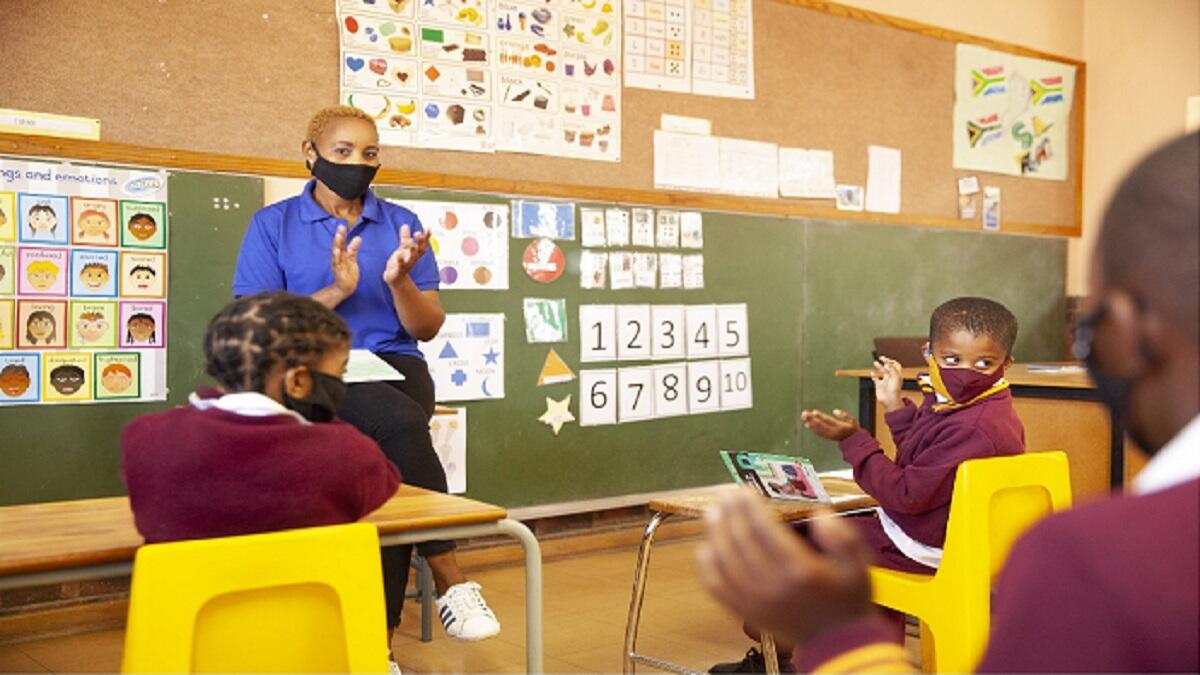
Project Manager and Coordinator of the Department of Basic Education, Lala Maje says that the rationale behind the decision, which has been part of the first and second phase of the programme, is based on the framework which guides the implementation of the Presidential Youth Employment Initiative (PYEI) , which forms part of the Presidential Employment Stimulus.
She adds that there are fifteen other departments that are implementing the Presidential Employment Stimulus in parallel with the Education Department. These additional departments also target a certain category of young people who are currently unemployed and are not in training.
For Basic Education, we are targeting young people that are not in employment that are neither in training nor education and we are targeting a specific age category.
She further states that other stimulus programmes that are implemented in other departments target graduates who form part of youth that are in education.
With this in mind, Maje also points out that the nation needs to view the entire employment stimulus from the presidential perspective and not only that of the Basic Education Department.
However, unions still argue that the requirement in question would still prevent the programme’s participating candidates from pursuing other employment opportunities upon completing the PYEI program.
In response to this, the Coordinator says that the PYEI program offers training that would counter the schedule of candidates who are currently studying.
“You will find that they are not going to be attending the training that we are offering. We are offer training in ICT, reading where we guide them in terms of starting small libraries within communities” she stated
She adds that this meant to inculcate a culture of reading within schools which is why they not only view the employment stimulus for basic education as a way of capacitating the youth in addition to providing and reducing unemployment.