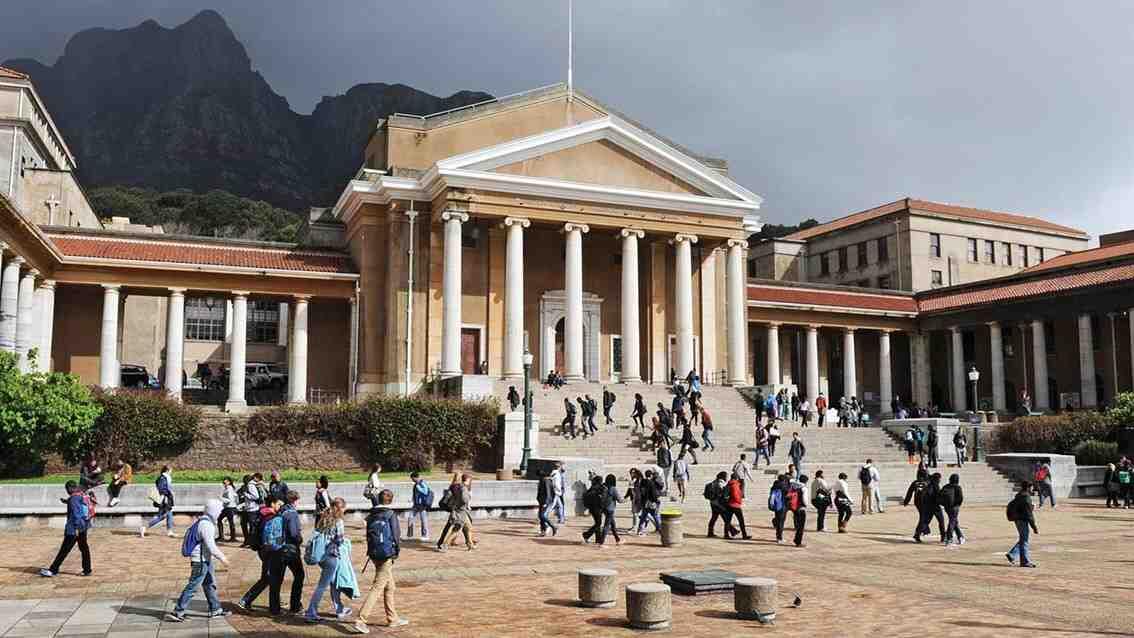
On Friday, 10 March, students and staff alike witnessed a violent turn to what began as peaceful protest action on the University of Cape Town’s (UCT) campuses. After leading another protest against fee blocks, the Student Representative Council (SRC), their student protestors, and other student bystanders were met with police force mandated by UCT management.
Given those developments, more students came out in protest, against both the fee block crisis, and the criminalisation of student protestors through UCT’s involvement of the South African Police Services (SAPS). Since then, however, mediated sessions have been held to resolve the ongoing fee crisis and avoid further violence.
These sessions have resulted in the SRC and UCT management finally reaching an agreement over fee blocks. In a recent announcement by UCT News, the following was stated:
Following mediation sessions between UCT management and the SRC on 14 and 15 March 2023, facilitated by an independent external mediator, the parties have reached an agreement over fee block issues.
The agreement ensures that UCT management will review its fee block policy with consideration of “the financial means of the university and the needs of each student, the socio-economic conditions affecting each student, the academic performance of each student, and so forth.”
The agreement will apply only to those academically eligible South African students who were successfully registered at UCT during the 2022 academic year, and not to international students due to visa restrictions.
The agreement entails taking on the following measures:
- Reviewing the circumstances of the fee blocks on a case-by-case basis, considering all issues that may prevent each affected student from participating in the 2023 academic year. Thereafter, “students with a combined family income of less than R650 000 will be presented to Council, with a reasonable payment plan to be implemented following gainful employment, within a three-week timeframe.”
- Some students whose gross family income is more than R650 000 may also be considered depending on the circumstances.
- Those students who have been presented to Council will be granted full access to academic resources for the entire 2023 academic year, pending the completion of their assessment.
- The academic assessment will consider each student’s degree type, how far along they are in its completion, and so on.
- A committee of four, with members from both the SRC and UCT management will be tasked with overseeing the outcome of this academic assessment.
The announcement went on to say:
The UCT management will take reasonable measures to assess affordability for each student and the need to develop an appropriate and individualised payment plan, including signing an Acknowledgement of Debt. Where a student so chooses, a student representative will be available to engage in the process.
The SRC does not plan to stop at this agreement, as it has been said that fundraising options for students in need are also in the works. In the meantime, both the SRC and UCT management plan to also tackle the newly imposed R45 000 cap on the NSFAS accommodation allowance, to further their efforts in easing the financial burden of students in need.