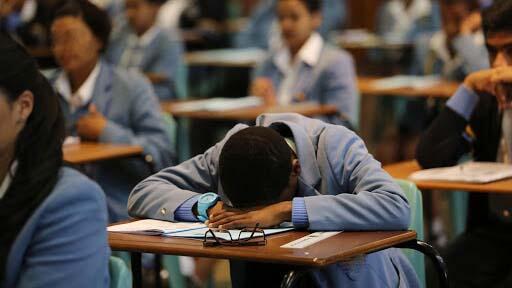
For many decades it was accepted practice for Matric exam results to be published in newspapers - with Matric learners often staying up until midnight to buy the first editions of their local newspapers.
However in recent years there has been much more attention focused on privacy, and the practice of publishing names in the full results was seen to bring undue pressure on young people writing Matric exams.
A compromise was introduced where the results are still published, but with the Matric exam number for each candidate rather than their names. The Department of Basic Education was confident that this protected the privacy of their learners, but the Information Regulator which is tasked with monitoring data privacy, was not and took the matter to court last year.
The case has now finally been heard by the Gauteng High Court in Pretoria and they have ruled in favour of the Department.
In its judgment delivered on Friday, a full bench of three judges rejected arguments that matriculants could memorise each other’s examination numbers to check one another’s results. The court described this claim as unrealistic.
The ruling brings further clarity to a legal dispute that has been ongoing since 2022, when the Department of Basic Education (DBE) first attempted to stop the public publication of matric results. Although courts have previously allowed the practice, the issue had never been fully settled until now.
The court confirmed that publishing matric results using only examination numbers does not violate learners’ privacy and remains in the public interest.
At the end of last year, the Information Regulator (IR) tried to block the publication of the 2024 matric results. However, its application for an interdict was dismissed in January, allowing the DBE to proceed with publication.
The DBE maintained that the court order permitting publication was still valid and argued that it had no option but to oppose the IR’s directive to withhold the results. Three related legal applications were later joined, including the question of whether the IR’s directive was lawful.
After the DBE went ahead and published the results, the IR imposed a R5 million administrative fine on the department. This fine was challenged in court and has now been overturned.
A key issue in the case was the interpretation of the Protection of Personal Information Act (Popia). The IR argued that publishing results alongside examination numbers breached the Act and issued the DBE with a notice in November instructing it to stop publishing matric results.
The IR maintained that learners could access their results through schools or via SMS notifications. It further argued that matriculants over the age of 18 must consent to publication, while consent must be obtained from parents or caregivers for those under 18.
In response, the DBE argued that examination numbers do not constitute personal information under Popia, as members of the public cannot identify learners based on these numbers alone.
The IR countered by suggesting that learners sitting next to one another in exam rooms could see each other’s examination numbers and later identify their results. However, Judge Omphemetse Mooki dismissed this argument as "fanciful", questioning who would realistically do this during an examination.
The judge emphasised that Popia is intended to protect privacy interests and found that the current method of publishing results does not infringe on those rights. The court therefore confirmed that matric results may be published, provided only examination numbers are used.
Matric final exam results for 2025 are scheduled to be released by the Minister of Basic Education on the evening of Monday 12th January 2026.