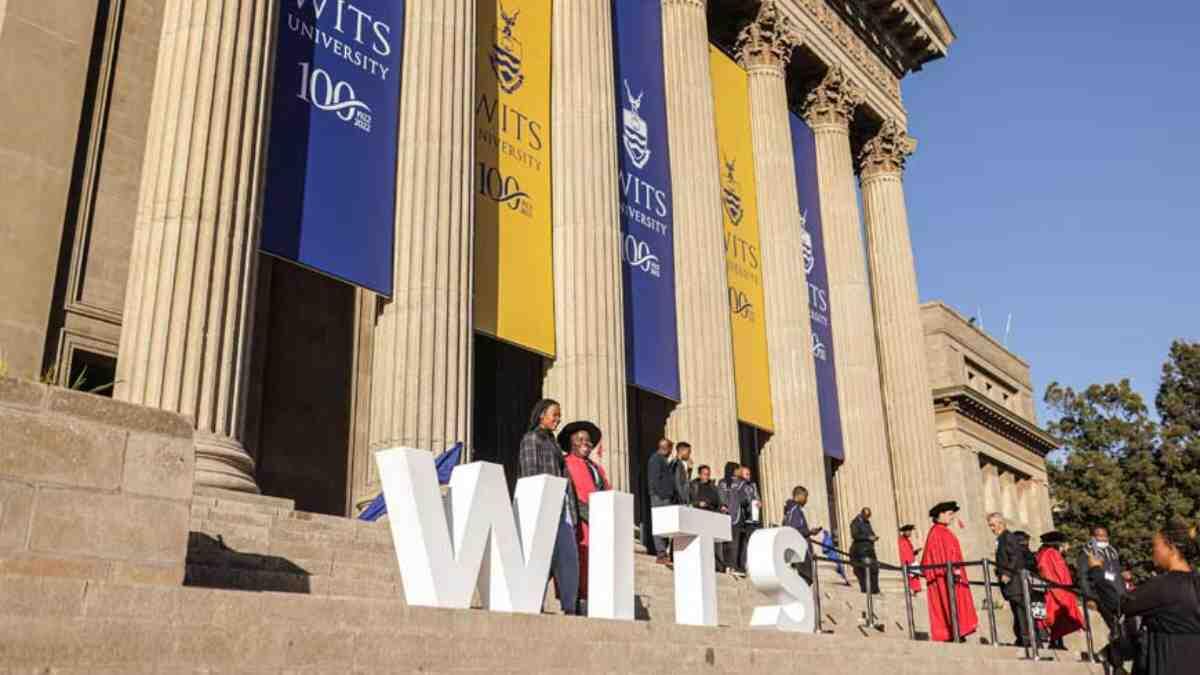
Deputy President Paul Mashatile has officially launched the R100 million Wits Strategic Hydrogen Localisation Investment Facility (Wits-SAHLI), describing it as a major step towards driving South Africa’s green hydrogen economy and rebuilding local manufacturing.
Speaking at the University of Witwatersrand’s West Campus, Mashatile said South Africa’s green hydrogen ambitions must support a new era of reindustrialisation.
He urged the country to “build what we use and innovate what we export”.
“This moment marks not only the beginning of a ground-breaking project, but also the start of a shared national endeavour: to build a new industrial capability that drives innovation, creates quality jobs, and contributes to a just, inclusive, and sustainable economy,” he said.
What Is the Wits-SAHLI Hydrogen Facility?
The Wits-SAHLI initiative is a partnership between Air Liquide SA, Wits University and the Localisation Support Fund. It forms part of South Africa’s broader Hydrogen Society Roadmap.
The modular pilot plant includes:
- A 110 kilowatt electrolyser
- 200 kilogram hydrogen storage capacity
- A 200 kilowatt clean power output system
The facility is designed to bridge the gap between laboratory research and industrial-scale hydrogen production, positioning South Africa as a competitive player in the global green hydrogen market.
From Improvised Classrooms to World-Class Labs
In a personal reflection, Mashatile compared the modern hydrogen facility to his own schooling experience in under-resourced classrooms.
“Our ‘science laboratory’ was nothing more than an ordinary classroom with a cracked chalkboard and wobbly desks…What we had was imagination,” he recalled.
He said projects like Wits-SAHLI symbolise the country’s progress and its responsibility to ensure future generations inherit opportunity rather than limitation.
“They close the gap between potential and possibility,” the Deputy President said.
Beyond research, the hydrogen plant will also serve as a training ground for engineers, scientists and entrepreneurs who will drive South Africa’s clean energy future.
Hydrogen as a Tool for Reindustrialisation
Mashatile highlighted localisation as a central pillar of the project, warning that South Africa cannot remain dependent on imported technologies in emerging industries like green hydrogen.
“Localisation generates jobs, enhances skill sets and supports small businesses. By reducing dependency on external supply chains, it empowers local researchers and industries to innovate,” he said.
He pointed to the decline in manufacturing’s contribution to GDP — from more than 22% in the early 1990s to about 12–13% today — as a sign of the urgency to rebuild industrial capacity.
“Behind every percentage point lost are thousands of vanished opportunities,” he warned.
According to Mashatile, initiatives such as Wits-SAHLI can help reverse this trend by strengthening local value chains, supporting SMMEs and retaining intellectual property within South Africa.
Supporting South Africa’s Energy Transition
The Deputy President acknowledged the role of Electricity and Energy Minister Kgosientsho Ramokgopa in advancing policy certainty around green hydrogen and the broader energy transition.
He stressed that hydrogen development must form part of an integrated national energy strategy that includes renewable energy expansion, grid upgrades and industrial reform.
Universities Key to Building Hydrogen Skills
Higher Education and Training Minister Buti Manamela also attended the launch, highlighting the role of higher education institutions in developing the skills pipeline needed to scale the hydrogen economy.
“Universities and research facilities are the backbone of this initiative. The hydrogen economy will require new thinkers, new problem solvers, new technicians, new researchers and new entrepreneurs,” Mashatile said.
By 2028, when the facility is expected to be fully operational, the partnership aims to grow a strong ecosystem of locally manufactured hydrogen components, expand enterprise development opportunities and enhance South Africa’s competitiveness in global green markets.
In closing, Mashatile described the hydrogen facility launch as the foundation of a new chapter in South Africa’s industrial development and clean energy transition.