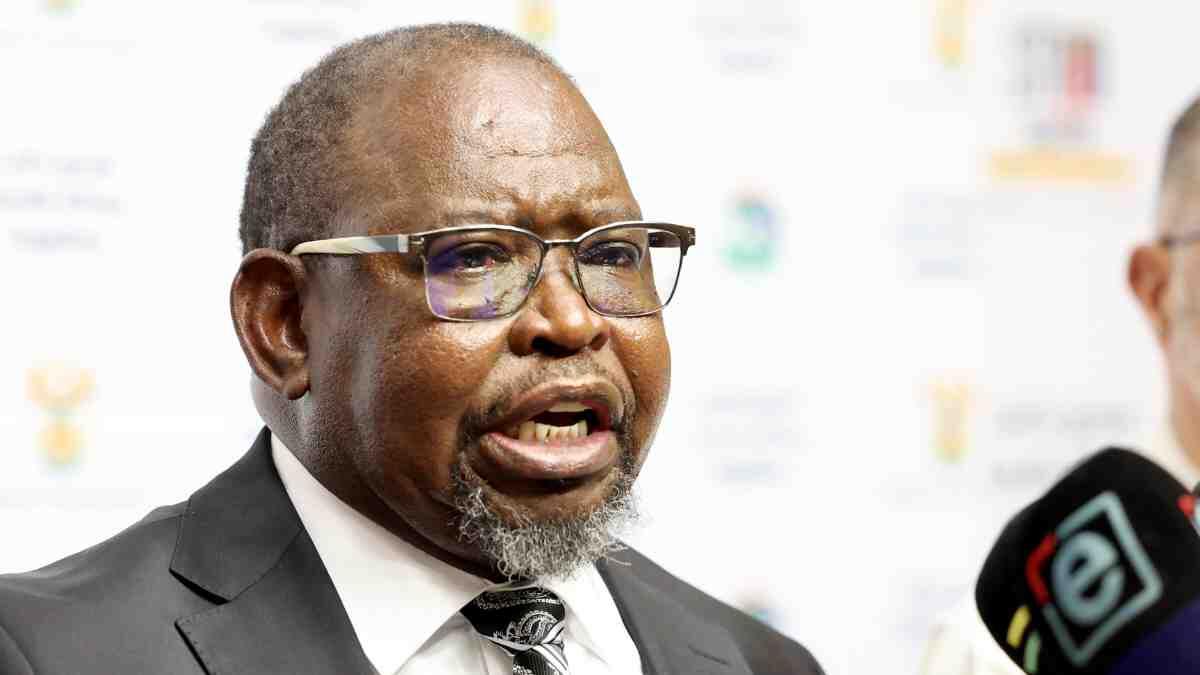
With the main goal of the Budget Speech being economic growth and government spending, a major announcement has now been made as Finance Minister, Enoch Godongwana, confirmed that there will be an increase in Value Added Tax (VAT).
On Wednesday afternoon, Finance Minister, Enoch Godongwana, presented the Annual Budget Speech. During this, he reveals the government's plan for collecting and spending money to support priorities in the country such as social support, education, healthcare, infrastructure, etc.
As much as the debate has been dominated by the proposed increase to value-added tax (VAT), the bigger debate must be about how we grow the economy for the benefit of the majority.
Godongwana announced that to be able to continue to fund health, education, transport and security sectors in the country, VAT will be increased by 0.5% in 2025/26, and by another 0.5% in the following year, bringing the VAT rate to 16% in 2026/27.
This will bring the VAT rate to 16 per cent in 2026/27 ... this decision was not made lightly. No Minister of Finance is ever happy to increase taxes.
Before raising the VAT rate, Treasury looked at other possibilities with the Minister saying that they "weighed up the policy trade-offs involved, including increases to corporate and personal income taxes".
VAT zero-rated food items will now include canned vegetables, dairy liquid blends, and organ meats from sheep, poultry and other animals.
The Minister also announced that the government plans to keep personal income tax brackets, rebates, and medical tax credits unchanged, without any adjustments for inflation. These measures are expected to generate an additional R28 billion in revenue for the 2025/26 financial year and R14.5 billion in 2026/27.
"We are aware of the fact that a lower overall burden of tax can help to increase investment and job creation and also unlock household spending power," the Finance Minister explained.
With South Africa's personal income tax rate and personal income tax collections as a percentage of GDP being higher than other developing countries, government found that increasing personal income tax would not be practical.
Taking on additional debt to meet the spending pressures was also not feasible. The amount
is simply too large. The cost of borrowing would be unaffordable. Our sub-investment credit
rating would also make this level of borrowing costlier and put us at risk of even further
downgrades.
"By opting for a marginal increase to VAT, its distributional effect and impact were cautiously considered," said the Minister. Government's decision to increase VAT allowed them to avoid further spending cuts and extend the social wage.