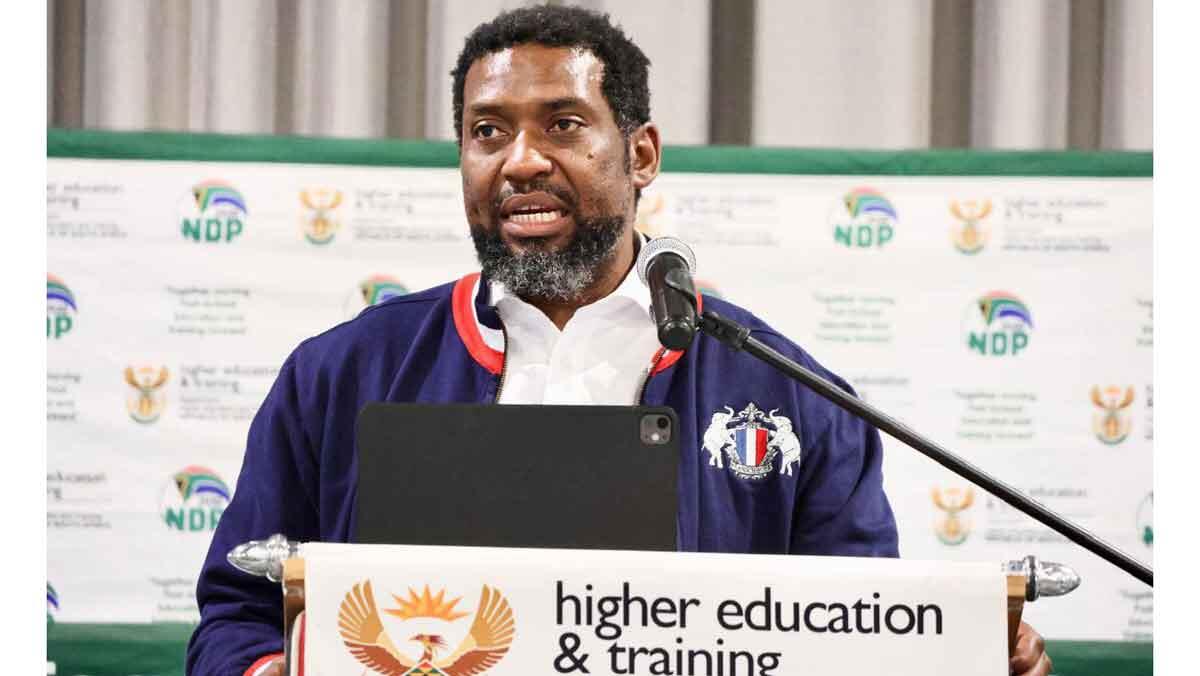
The construction of the long-awaited Ekurhuleni University is expected to begin in 2029, according to Higher Education and Training Minister Buti Manamela.
Speaking in the National Assembly on Wednesday, Manamela explained that the immediate priority for the project is not the construction of the campus, but rather the registration of the institution’s first students.
“The goal is not construction commencement, but it is about registration of the first student,” Manamela told Parliament.
The Minister said the remaining feasibility work, together with an application to the Budget Facility for Infrastructure (BFI) at National Treasury and the required design and procurement processes, is expected to take around three years to complete.
Possible Early Student Enrolment
Manamela revealed that discussions have taken place with the Executive Mayor of the City of Ekurhuleni to revive the feasibility process for the new university.
Following the meeting, both parties agreed to move forward with renewed commitment to the project.
“The city has offered land and infrastructure options, and the department is exploring whether temporary facilities or blended academic delivery could allow students to enrol ahead of the 2029 construction date,” he said.
The proposed university was first announced by President Cyril Ramaphosa during the 2020 State of the Nation Address and was later confirmed in the national budget.
However, six years after the announcement, a key step in the process — the location study to determine the site of the university — has not yet begun.
Manamela said this delay was caused by a budget shortfall of R19.5 million, which is needed to complete the feasibility process.
He added that the department is working to address the funding gap by reprioritising existing infrastructure grants.
“A significant change in the project’s financial outlook came in the February 2026 Budget, when National Treasury indicated its willingness to allocate infrastructure funding for both the Ekurhuleni and Hammanskraal universities through the Budget Facility for Infrastructure,” Manamela said.
The Minister also noted that in previous years no additional funding had been allocated to the project. This had led government to consider a public-private partnership model, which was not approved by National Treasury for university infrastructure projects.
Stronger Controls On NSFAS Student Accommodation
Manamela also confirmed that the Special Investigating Unit (SIU) is currently investigating student accommodation linked to the National Student Financial Aid Scheme (NSFAS) under a Presidential Proclamation.
“NSFAS has commenced paying accommodation providers directly, removing solution partners from the disbursement chain. A national audit of all accredited accommodation is underway,” he said.
Monitoring High-Risk Universities
The Minister also addressed questions about disruptions at Walter Sisulu University and the University of Fort Hare.
He acknowledged that several institutions are facing structural challenges, including delays in NSFAS payments, shortages of student accommodation and ongoing financial deficits.
According to Manamela, the department has introduced a system of differentiated intensive monitoring for universities identified as high-risk.
“Our assessment is that the early detection framework successfully identified risk conditions at both Fort Hare and WSU in advance of disruptions, but structural drivers need to be resolved within the registration period,” he said.
He added that resolving these challenges requires long-term solutions rather than short-term crisis management.
Tracking Outcomes From SETA Training Programmes
When asked about the number of people trained by Sector Education and Training Authorities (SETAs) over the past decade, Manamela said consolidated cross-SETA data is currently not available as a single figure.
He explained that the department plans to publish a baseline report by the end of the 2025/26 financial year.
The department is also establishing a Skills Observatory that will be independently coordinated by the Human Resource Development Council of South Africa (HRDC).
Manamela noted that performance data from SETA training programmes is currently published in individual SETA annual reports, which outline the performance of programmes across the skills development system.
PSET “War Room” Monitors Registration Period
The Minister also revealed that a Post-School Education and Training (PSET) War Room was established to oversee the academic registration period.
The structure, chaired by Manamela, met weekly to monitor developments across the post-school education sector.
“The War Room reviewed institutional and sector-wide reports, enabling the monitoring of developments in real time and allowing for swift, evidence-based responses where necessary,” he said.
He explained that the initiative helped identify risks early and allowed institutions to coordinate responses more effectively.
“Where challenges were cross-cutting in nature, responses were implemented simultaneously by the relevant institutions, with actions aligned and coordinated through the War Room structure. This demonstrated that a single, coherent PSET that is coordinated can be responsive to the needs of students,” Manamela said.
Additional reporting by SANews.gov.za