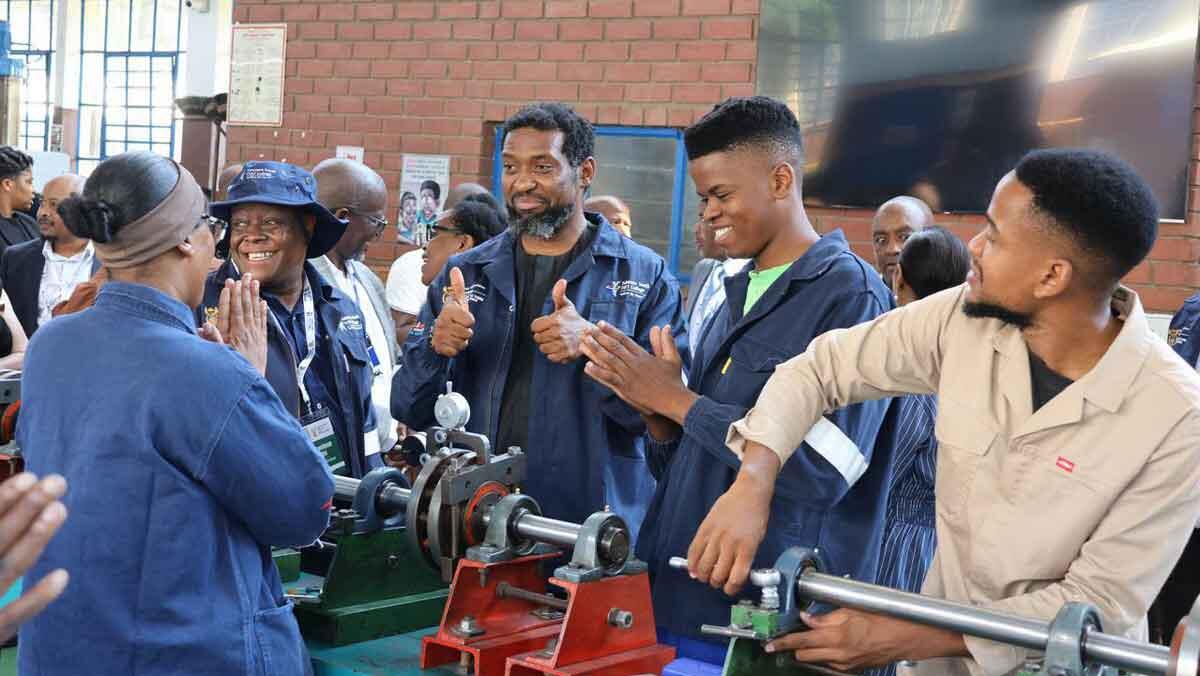
Deputy Minister of Higher Education and Training, Dr Nomusa Dube-Ncube, has warned that South Africa's call for a skills revolution will remain ineffective unless more learners choose Technical and Vocational Education and Training (TVET) colleges and other post-school education institutions.
Speaking at the launch of the Artisan and Skills Development Centre at Elangeni TVET College in Inchanga, west of Durban, Dube-Ncube called for a collective effort to strengthen vocational education and position TVET colleges as a first-choice study option for young people.
TVET Colleges Must Be More Attractive To Learners
The Deputy Minister said South Africa's future economic growth depends on developing a strong pipeline of skilled workers who can support the country's industrialisation, infrastructure development and economic priorities.
Reflecting on a recent career expo in Ndwedwe, Dube-Ncube expressed concern that many learners still do not view TVET colleges as an attractive pathway after school.
“Yesterday [Thursday] at the career expo in Ndwendwe, while interacting with learners in basic education, I had a reckoning with the fact that Technical and Vocational Education and Training (TVET) colleges remain unattractive to our learners,” Dube-Ncube said.
She stressed that government and stakeholders must work together to change perceptions about vocational education and ensure learners understand the opportunities available through skills-based training.
Investment In Skills Development Must Deliver Results
Dube-Ncube said significant investments in infrastructure and skills development facilities must be accompanied by efforts to increase student enrolment and improve institutional performance.
"We hold a responsibility to ensure that the money and infrastructural investment of institutions like these do not fall by the wayside. We need this TVET college to action its envisaged mandate, and it is in that hope that every TVET college in the country follows suit," the Deputy Minister said.
She described the launch of the Artisan and Skills Development Centre as an important milestone in expanding access to quality vocational training and developing skills that are in high demand across multiple sectors.
TVET Colleges Central To Economic Development
According to Dube-Ncube, TVET colleges should no longer be viewed as secondary education institutions but rather as essential drivers of South Africa's economic growth and development agenda.
"Today's gathering must signal a shift in how we understand the role of TVET colleges within the Post-School Education and Training system. It should affirm that these institutions are not peripheral, nor secondary, but are in fact central to our national development agenda and industrial future."
She noted that South Africa is moving towards an economy shaped by advanced manufacturing, renewable energy, logistics, digital transformation and large-scale infrastructure development.
As these sectors expand, TVET colleges will play a critical role in producing the skilled workforce needed to support economic competitiveness and job creation.
"TVET colleges are not simply training institutions. They are strategic economic enablers," she said.
New Artisan And Skills Development Centre To Support Employment
The Deputy Minister explained that education and employment should no longer be viewed as separate stages of development.
Instead, training programmes must be directly linked to workplace readiness, innovation and productivity.
The new Artisan and Skills Development Centre is expected to offer:
- Artisan training programmes.
- Workplace-based learning opportunities.
- Entrepreneurship development support.
- Industry-responsive technical education programmes.
"It represents a decisive shift from training for certification to training for production, employment and enterprise creation," she said.
Skills Training Must Meet Local Economic Needs
Dube-Ncube also emphasised the importance of aligning training programmes with the economic realities of surrounding communities.
The new centre is strategically positioned to support skills development and economic activity in Inchanga, Hammarsdale, Ximba, Nyuswa and neighbouring rural and peri-urban areas.
"We must be deliberate in aligning education provision with economic geography, ensuring that training institutions are embedded within growth corridors where skills demand is real, immediate and expanding," she said.
Industry Urged To Expand Workplace Opportunities
The Deputy Minister called on employers and industry partners to increase workplace placement opportunities, apprenticeships and graduate absorption programmes to help young people transition successfully into employment.
She warned that skills development programmes can only achieve their full impact when learners are given opportunities to gain practical experience and secure employment after training.
"Training without absorption does not complete the development cycle," she said.
The launch of the Artisan and Skills Development Centre forms part of broader efforts to strengthen South Africa's skills development system and ensure that vocational education contributes directly to economic growth, employment creation and sustainable development.