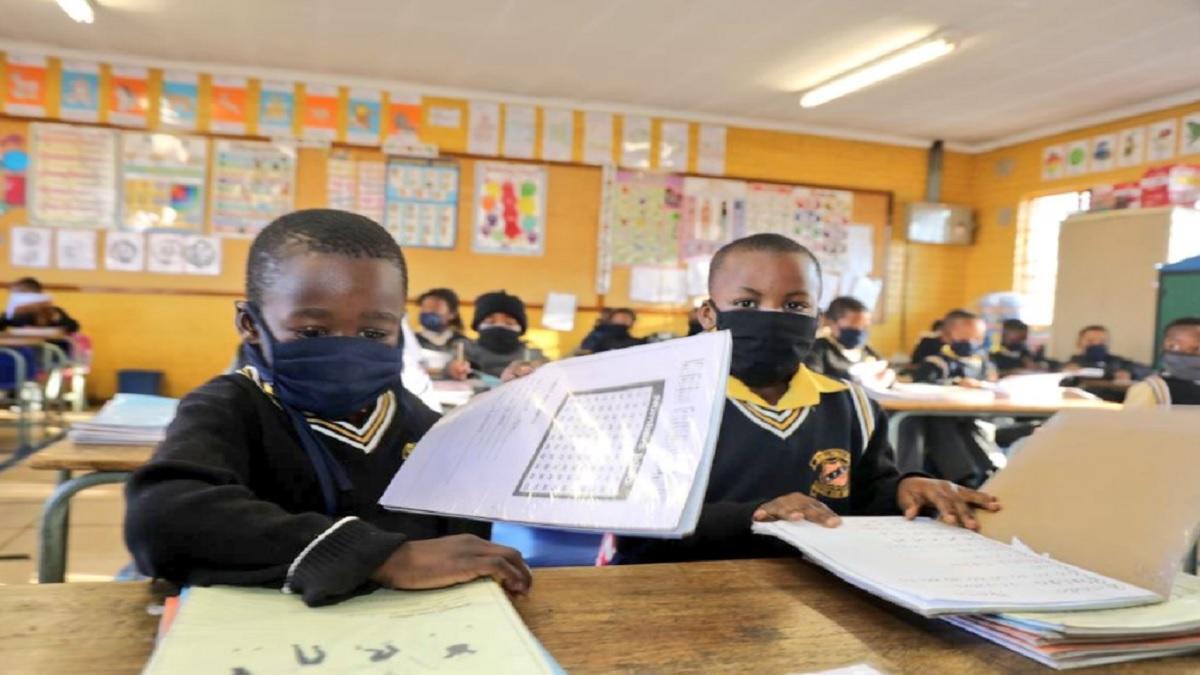
One of the well-known facts about South Africa’s basic education system is that the majority of schools across the country teach all subjects in English from the foundation phase right through to the secondary phase of school.
However, children who speak African languages at home suffer greatly as a result of this, as many of them are not sufficiently capable of understanding the material that is taught to them.
Fortunately for this cohort of school learners, an amendment to the Basic Education Law Bill aims to rectify this by adding indigenous African languages to the list of languages taught in schools after Grade 3. Additionally, changes to the legislation aims to give the government authority over governing bodies, which now influence language rules in schools.
While going over the merits and importance of the Bill’s amendment Dr Xolisa Guzula, UCT academic in Applied Language and Literacy Studies praised the department’s decision.
This is because parallel and dual-medium schools do exist. However, some of these schools do not admit black students since they prefer English language learners, according to the university professor.
He also goes on to say that there is a misconception that black children enrol in schools that teach in Afrikaans and English to purposefully change the linguistic climate.
We know there were schools that refused to accept black children because they wanted them to remain English or Afrikaans. But we also know of schools that have accepted black children and have parallel medium classes. We think this should continue for those schools instead of asking children to travel far distances to schools.
He adds that the institutions that share this view are not referring to learners who are compelled to learn through the English medium from Grade 4 and beyond. Guzula cited an example of Former Education Minister, Cameron Dugmore implementing bilingual instruction in isiXhosa and English for kids in black schools in 2007.
In 2011, the Western Education Department gave those schools an order to resume teaching in English. They refused to provide question papers and teaching material to the isiXhosa schools and questioned why this was not the case for English and Afrikaans mediums.
However, many opposed to multilingual education have expressed doubts about its viability and cost. A bilingual curriculum would need to be developed, and qualified instructors would need to be recruited.
The idea that creating multilingual learning environments was expensive has been refuted by Dr Guzula on the basis that multilingual writing is possible for materials and that in the Western Cape, the department and education specialists have been experimenting with a bilingual science curriculum.
The linguistic education expert adds that critics should instead calculate the cost of repeating the grade and failing against the cost of having to provide material for the children and training of teachers.