Here's Why 2023 NSFAS Allowances Were Delayed


Please share this article

Advertisement


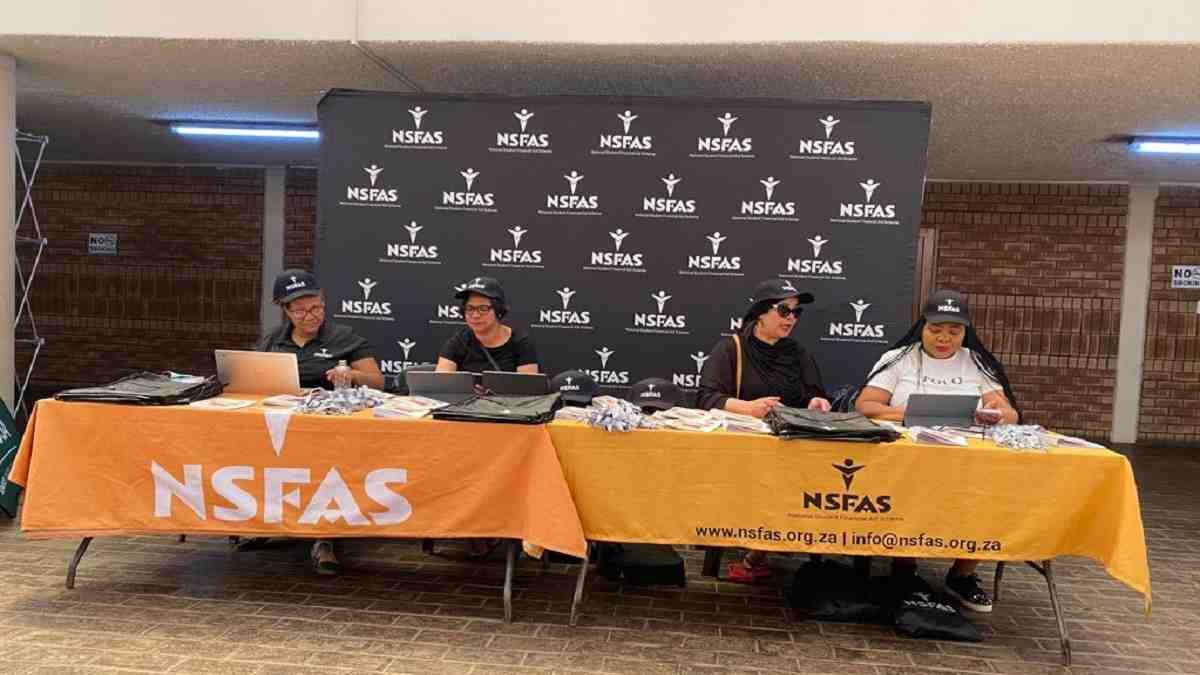
The National Student Financial Aid Scheme aimed to ensure that the 2023 academic year got off to a good start. Part of this, was ensuring that funded students receive all of their allowances on time and do not face delays that could have an impact on their academic year.


Advertisement i


Although the National Student Financial Aid Scheme (NSFAS) and the Department of Higher Education and Training (DHET) made promises of a smooth-sailing academic year, this hasn't been the case.

The plan was, according to NSFAS Spokesperson, Slumezi Skosana, that there would've been an early transferring of NSFAS money to institutions of higher learning, to ensure that students receive allowances when the 2023 academic year commences. 

The scheme is notoriously delayed when it comes to disbursing funds to its qualifying students, and this year was no different. 

This delay with NSFAS was one of the reasons why students at various tertiary institutions took protest action, as they were unable to successfully register for the year, due to the appearance of financial blocks/exclusions. 

Skosana explained that delays in payment of allowances sometimes occur when institutions don’t provide NSFAS with the registration data of students. 

According to the bursary scheme, the majority of students who were not yet paid is due to the late submission of funding data by tertiary institutions. 

NSFAS has begun distributing its money to tertiary institutions (both TVET colleges and universities) for its disbursement to qualifying students, beginning on 31 January 2023.

A second upfront payment to tertiary institutions was made on 6 March 2023, and was paid while institutions were still finalising allowance allocations and claims for the registration data. 

Skosana added that NSFAS has now published the funding list, which lists students that are approved to receive financial aid from the scheme. Institutions now have access to this funding list, which allows for them to quickly verify if a student is funded by NSFAS, and therefore receive their allowances. 

Minister of Higher Education, Blade Nzimande, has agreed to increase the allowances distributed to NSFAS-funded students, after the bursary scheme presented it to him. This was after consultation with various stakeholders within the Higher Education Sector. 

NSFAS students receive several allowances that aim to cover the costs related to their studies. This includes a learning material allowance, a living allowance and an accommodation allowance.

Nzimande explained that the NSFAS living allowance will be increased by 10%, and is now valued at R16 500 for university students. 

"After concurrence by the Minister of the 10% increase in allowances, institutions have started to load registration data inclusive of this confirmed increase," stated NSFAS. 

In addition to the welcomed increases, the NSFAS accommodation allowance was capped at R45 000 this year, which is paid over a year with students needing to find accommodation equal to or less than R4 500 per month. 

The accommodation allowance cap was introduced to manage unregulated costs and prevent profiteering and price collusion by private student accommodation providers, explained the South African Union of Students (SAUS).
Suggested Article:

NSFAS

Although the National Student Financial Aid Scheme has officially confirmed that it is no longer accepting applications for the 2023 academic year, there remains a group of applicants who are yet to receive tangible feedback regarding the outcome of their applications.


Advertisement


Google preferred source
Do you want to get priority access to the articles about Learnerships, internships, bursaries and so much more on the Careers Portal website?
Then click here to make Careers Portal a Preferred Source.


Advertisement

Post-Matric Options


We helped you with past papers for your matric exams, so hopefully you are happy with your Matric results. So now you are faced with a lot of post-matric options that can shape your future paths. You might want to study law, teaching, or nursing. Of course studying is expensive so we have helpful advice about student loans, NSFAS bursaries, Fundi loans, ISFAP, and lots of other funding options.

These options range from pursuing higher education at universities , TVET Colleges or  private colleges, finding student accommodation, entering vocational training programs (like Learnerships and internships), joining the workforce, or even starting your own business. There are so many choices but we are here to help.


Advertisement


Latest SASSA articles

Social grant beneficiaries who are still using South African Social Security Agency (SASSA) Gold Cards have been urged to switch to the new Postbank Black Cards before the deadline.

Where to Study


Advertisement m


Other Opportunities

Pick n Pay are running a graduate buyer internship programme and are looking for ambitious, energetic and analytical graduates to join them. 

With the Absa Global Markets Graduate Programme 2026 you can launch your career in trading and sales. 


Advertisement


General News

Applying for your Smart ID Card has gotten even easier as you can now apply online via e-Home Affairs. Here is how to apply, upload documents and pay for your application all from the comfort of your own home.

Careers Advice

With soaring violence, devastating levels of women and child abuse combined with the debilitating effects of endemic poverty, HIV AIDS and high unemployment, as well as the prevalence of bullying, gangsterism and substance abuse, it is not surprising that South Africa has large-scale mental health issues.


Advertisement i


Sponsored Ad


Copyright: Portal Online Publishing (Pty)Ltd | Privacy Policy | Terms of Use
Skills Portal | Careers Portal | Jobs Portal | Bursaries Portal | Skills Universe
About us | Contact us
Portal PublishingPress Council