Earlier this month, the state of governance at TVET colleges was also called into question. Issues of concern include maladministration and mismanagement of Councils. As a result, two of the 50 TVET colleges have been placed under administration and investigations are now in progress.
Of South Africa’s 26 public universities and universities of technology, there are major concerns regarding the governance at nine of these institutions. Some remain stable, and others are being closely monitored due to reports of corruption, safety concerns and maladministration.
Universities Raising Concerns And/Or Being Monitored
The Central University of Technology (CUT) in Bloemfontein is currently under investigation. In October 2022, Professor Norman Duncan was appointed as the Independent Assessor to investigate the affairs of the institution. This came after the suspension of the Vice-chancellor (VC) in 2020, the Council’s handling of the matter and the number of allegations that were brought to the attention of the Minister.
Mangosuthu University of Technology (MUT) has been placed under administration following the dissolution of the Council. The Minister has appointed Professor L van Staden as Administrator to assume the powers and responsibilities of the Council.
There are many concerns around the state of governance at the University of Cape Town (UCT). The investigation of the Panel is ongoing and the Department continues to monitor the situation.
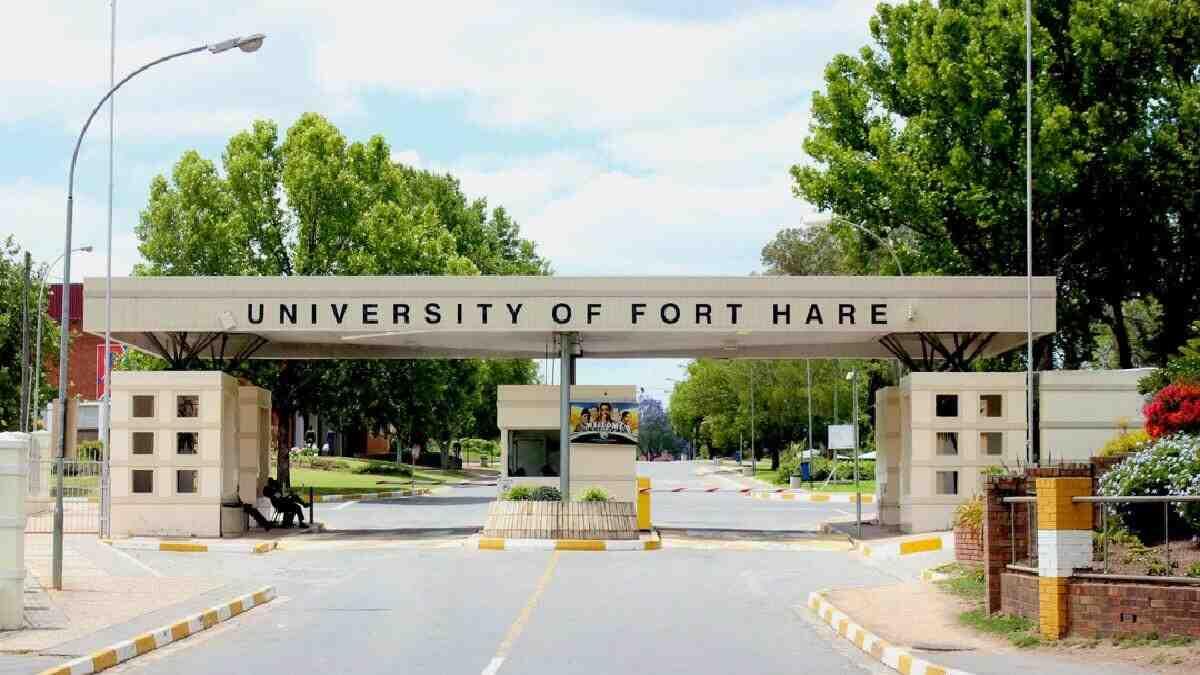
The University of Fort Hare is in a post-administrative state and the Department continues to monitor the situation. However, there are still concerns regarding the safety of students, staff and executives following multiple assassination attempts.
At this stage, governance is stable at the University of KwaZulu-Natal (UKZN), however, reports of corruption surrounding private student accommodation have been brought to the Department’s attention.
Serious issues regarding governance and management at the University of South Africa (UNISA) have been brought to light in recent MTT and IA reports. The Department has suggested the appointment of administrators to deal with the situation.
Stellenbosch University (SU) is being closely monitored following recent calls for the VC to step down.
Although governance is stable at the University of Venda, the Department is concerned about the safety of members of the senior and executive management following threats and an attempted assassination.
The state of affairs at the Vaal University of Technology continues to be monitored closely. The post-administration Council took over governance of the university in August 2021 and concluded the process of the appointment of a new VC, who started his term of office in February 2022. However, later that year, concerns were raised about his performance. This resulted in tension between him and the Council Chairperson, who resigned in October 2022. Dan Mokoena, the University Registrar, is the acting VC.
Institutions Not Currently Being Monitored
- Cape Peninsula University of Technology (CPUT): governance remains stable following the reconstitution of the Council in 2022. The amended Statute was approved by the Minister.
- Durban University of Technology (DUT): the Statute was reviewed in 2021.
- Nelson Mandela University (NMU)
- North-West University (NWU)
- Rhodes University (RU)
- Sefako Makgatho University (SMU)
- Sol Plaatje University (SPU)
- Tshwane University of Technology (TUT): a new Chair has recently been elected.
- University of the Free State (UFS)
- University of Johannesburg (UJ)
- University of Limpopo (UL): the appointment of a new VC is currently in progress.
- University of Mpumalanga (UMP)
- University of Pretoria (UP)
- University of Zululand (Unizulu)
- The University of the Western Cape (UWC): the appointment of a new VC is currently in progress.
- University of the Witwatersrand (WITS)
- Walter Sisulu University (WSU)
Universities As Autonomous Institutions
Universities are autonomous institutions, meaning that the Council is tasked with the responsibility of developing Statutes and rules to govern the affairs of the university. However, oftentimes this is used as a pretext for avoiding transformation and a lack of accountability to defend mismanagement, abuse power and authority by the institutional leadership and institutions, as well as the suppression of ideas.
Still, the government has the responsibility of ensuring accountability for the use of public resources and having regard to the reputation and integrity of the system of higher education.
Institutions are required to report annually to demonstrate the results they have achieved with the resources at their disposal, as well as demonstrate how they have met national policy goals. As per the Reporting Regulations, they are also required to report on their governance arrangements.
Despite existing governance frameworks, the state of governance at our tertiary institutions remains a challenge.
Institutions where concerns have been raised are being investigated by the Department of Higher Education. The findings of these investigations will be communicated as they become available.
The Department is currently working on a project which is aimed at supporting and strengthening institutional governance.