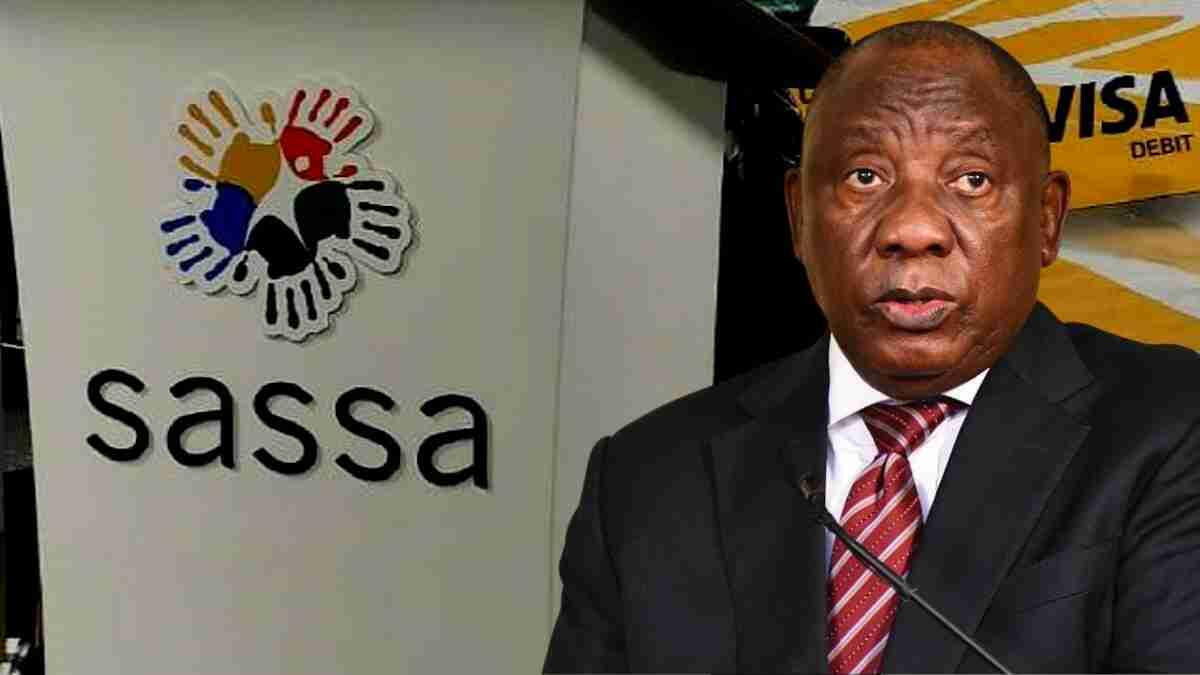
The Department of Social Development (DSD) confirmed consultations will continue regarding implementing Basic Income Support (BIS). Their goal is to submit a draft policy to parliament in the next 2025/2026 financial year.
Further internal consultations, including with the National Treasury, are required to address concerns about the policy's affordability and integration with employment strategies. This decision follows extensive nationwide consultations in which the DSD sought input on a discussion document outlining key elements of the proposed BIS.
These consultations led to the development of a draft policy intended for Cabinet approval and public consultation by October 2024. However, the draft presented to the Social Protection, Community and Human Development (SPCHD) Cabinet Committee in November 2024 revealed ongoing disagreements.
The Committee's view was that there is a need for further consultation with internal stakeholders such as the National Treasury on the affordability of the provision as well as linkages with employment opportunities,
This delay stems from a lack of consensus on the economic modelling that suggests the BIS is affordable, which is a point of contention between the DSD and the National Treasury.
While these consultations are ongoing, reports suggest the government will extend the Social Relief of Distress (SRD) Grant for an additional 12 months. The grants’ implementation was set to conclude in March 2025. However, leaked budget documents indicate that the grant will continue supporting unemployed people for a further 12 months.
This extension aims to provide a safety net while the BIS policy is finalised.
Contextualising The Basic Income Grant
The concept of a Basic Income Grant (BIG) in South Africa was first brought forward at the 1998 Presidential Jobs Summit. This led to the 2002 Taylor Committee report, which recommended the implementation of a BIG with a value of R100 per person.
No significant developments regarding introducing a Basic Income Grant occurred for almost two decades.
However, in 2021, the DSD commissioned a study into the impact a Basic Income Grant would have on South Africa. The team of experts argued that South Africa should gradually introduce a BIG as it would not result in major trade-offs with existing social support mechanisms, economic sustainability and the fiscal position of the government.
They recommended an entry-level version of the grant should be considered with the starting benefit value set at the Lower Bound Poverty Line. They added that BIS should form part of the overall social assistance framework aimed at eliminating poverty at the Upper Bound Poverty Line.
In 2022, the commission aimed to determine financing strategies and assess the potential effects on poverty, inequality, and economic sectors.
Their findings suggest that the SRD Grant, if properly funded, offers significant opportunities for income redistribution. Notably, the study indicated that using progressive taxation, such as personal income tax, as opposed to value-added tax, can improve income distribution and stimulate economic output.
The commission added there are benefits when combining social grants with targeted wage subsidies to foster inclusive growth. While government-subsidised employment programmes were deemed valuable, the study concluded that they should be considered complementary to, rather than substitutes for, income protection measures.