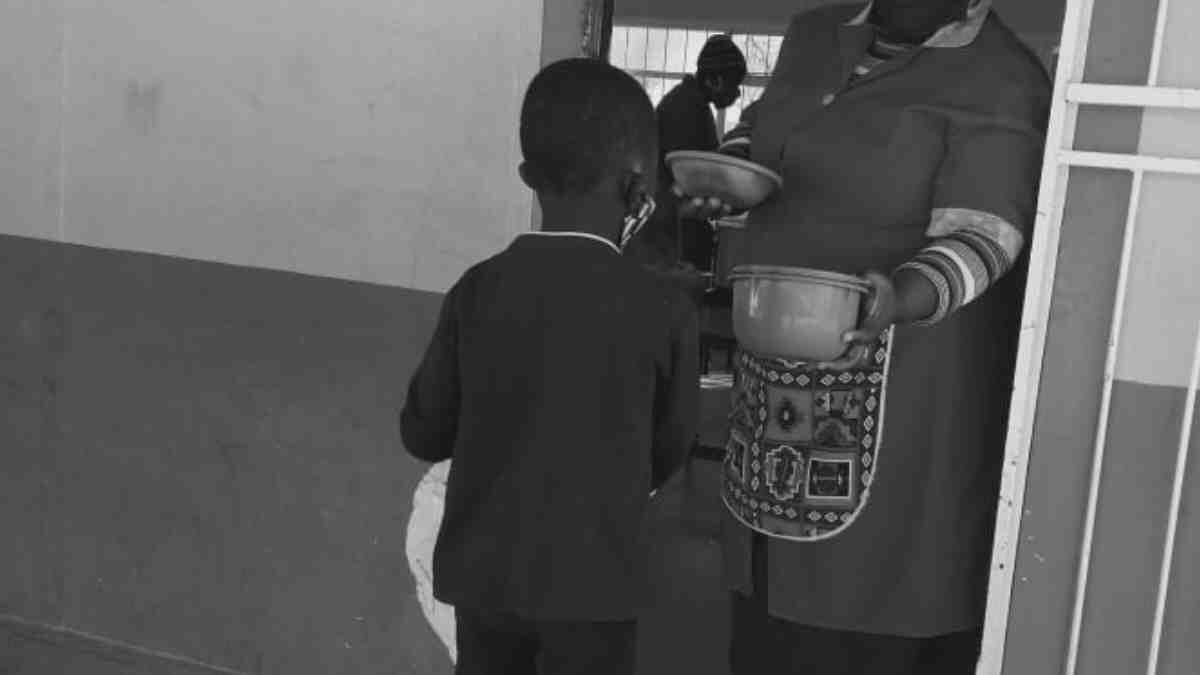
The Department of Basic Education (DBE) says recent cases of food poisoning among schoolchildren are not connected to the National School Nutrition Programme (NSNP).
Food safety at schools in South Africa has been placed under the spotlight following the death of six children. Health Minister Dr Aaron Motsoaledi confirmed that the six learners died of organophosphate poisoning.
The results show that the cause of death is unequivocally organophosphate poisoning.
Organophosphate is not a single substance but a group of chemicals used in agriculture or as pesticides. The specific organophosphate identified in the case of the six learners is called Terbufos.
All six children died from Terbufos Ingestion.
Food Safety And The School Nutrition Programme
The National School Nutrition Programme is a national school feeding scheme that feeds over 9 million learners nutritious meals daily.
Contrary to false reports, the department confirmed that all evidence points to food items purchased from informal vendors near schools—not to the meals provided under the NSNP.
These food poisoning incidents have disrupted teaching and learning, as most cases have affected learners during school hours. In response, schools have had to shift focus to provide medical assistance to affected students.
The department is confident that the National School Nutrition Programme adheres to stringent food safety standards. The programme operates with a budget of R9.8 billion for the 2024/25 financial year and is aligned with the National Development Plan 2030 to address hunger and malnutrition.
“Strict hygiene practices are a priority in the NSNP,” the department noted.
These practices include keeping food preparation areas clean, separating cooked and raw foods and ensuring food is cooked thoroughly. Emphasis is also placed on storing food at safe temperatures as well as using safe water and raw materials.
These principles ensure that the meals provided under the NSNP are safe and healthy. To date, the programme has been able to serve nutritious food to millions of learners daily without any incidents that pose a risk to their health.
The DBE has encouraged School Governing Bodies and School Management Teams to ensure that only healthy snacks and beverages are available to learners on school grounds.
While schools do not have jurisdiction over external street vendors, the department suggested that school communities work to keep a database of individuals selling food near school premises.
We urge schools to engage with tuck shop operators and other vendors within their jurisdiction to discuss the nutritional value and safety of the products they sell. The entire community, especially around the school, should take collective responsibility for the health and well-being of its children.
Parents, guardians, and caregivers are also encouraged to be vigilant about the food items their children consume.
Communities are encouraged to report suspected food poisoning cases to their local municipality or the South African Consumer Goods and Services Ombudsman at 0800 029 999.