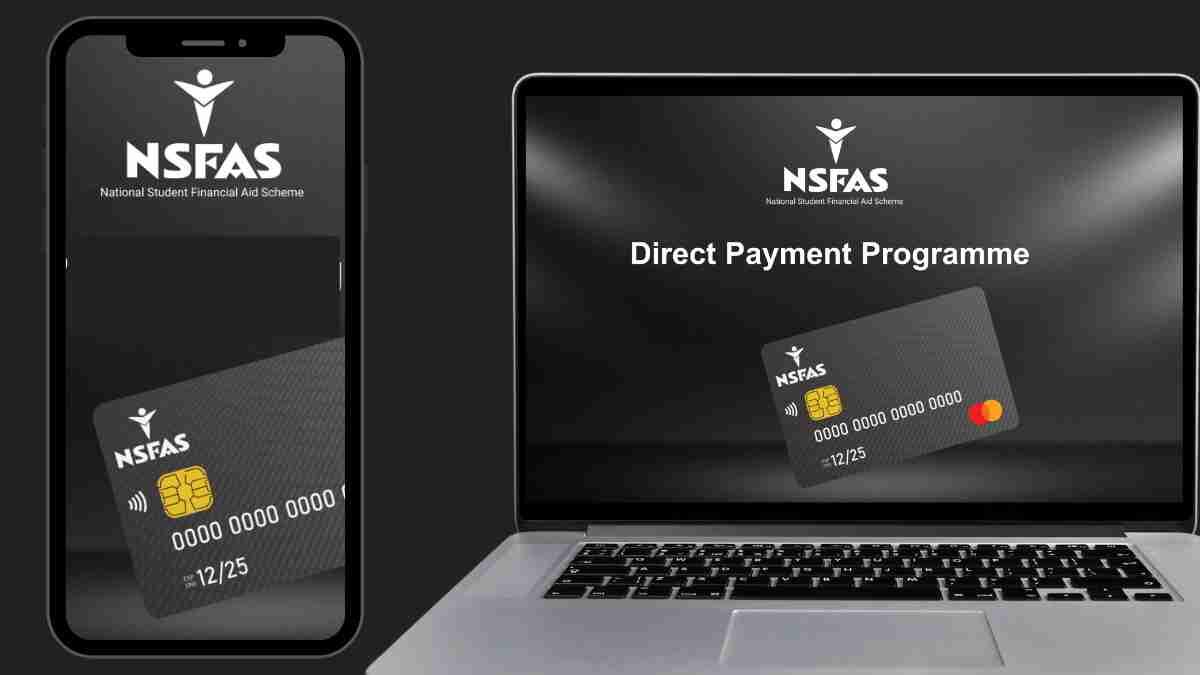
During May 2023 university students funded by the National Student Financial Aid Scheme (NSFAS) were invited to sign up for their new NSFAS bank card. The new payment solution is for the distribution of NSFAS allowances directly to students.
NSFAS distributes several allowances to funded students, including an accommodation allowance, a living allowance and a learning material allowance. Previously these allowances were distributed to students via universities and service providers.
The financial aid scheme partnered with four banking service providers to bring the new payment solution to students. These service providers are Tenet Technology, Coinvest Africa, Ezaga Holdings and Norraco Corporation.
In August 2022, NSFAS issued a tender, inviting service providers to bid for the right to provide banking services to funded students for a period of five years. Companies would need to provide services, including general banking services, transactional banking services and electronic banking services amongst others.
One of the mandatory requirements for companies bidding for the tender was submitting evidence of registration with the Backing Association of South Africa (BASA). The bidder would be required to submit a copy of their valid banking licence.
NSFAS warned that failure to comply with these mandatory requirements would immediately disqualify a company's bid.
The Organisation Undoing Tax Abuse (OUTA) alleges that NSFAS hired service providers without banking licences or VAT registration to make direct payments of student allowances.
OUTA says at the time of bid submissions, only Ezaga Holdings held an affiliated banking licence with Access Bank. They add that two bidders, Norraco Corporation and Tenet Technology were not registered as VAT vendors when they submitted their tender.
They noted their concern as the deal to provide banking services to NSFAS could be worth approximately R1.5 billion over five years, with the bill being footed by students.
This will be paid directly by the students out of their allowances, as the costs are deducted from their bank accounts.
They also questioned who will cover the costs of manufacturing the new NSFAS cards. It is estimated that NSFAS will fund approximately 900,000 students during the 2023 academic year.
OUTA found that most commercial banks in South Africa offer accounts for students with low banking fees and costs and more value-added services than the approved service providers.
OUTA adds that the cost of these student accounts, provided by these companies, is more expensive than accounts available from South Africa’s biggest banks. A comparison of costs can be found on OUTA’s website.