There has been a lot of uproar over the Basic Education Laws Amendment (BELA) Bill with some saying the laws proposed are controversial. This bill has seen both support and pushback from parents, teacher unions and even students.
What is the BELA Bill?
The Bela Bill was introduced in Parliament on 15 December 2021, and was later referred to the Portfolio Committee on Basic Education for consideration.
The Bill seeks to amend the South African Schools Act and the Employment of Educators Act. The committee held two meetings on the Bill in February 2021, during which a briefing was sought from the Department of Basic Education.
After in-house discussions, the committee called for written public submissions from 1 May to 15 June 2022. That deadline was extended to 15 August to allow the public more opportunity to participate.
Some of the new laws proposed are as follows:
- Grade R will be the new compulsory school starting age, as opposed to grade 1
- Parents who do not ensure their child or children are in school, receiving fines or jail time up to 12 months and making it a crime.
- Parents and learners will need to supply specified documentation when applying for school admission
- School Governing Bodies will be held more accountable for disclosures of financial interests – including those related to their spouses and family members. The role of SGBs will be smaller and provincial heads of education departments will have the role of making a final decision on a school's language and admissions policy.
- Prohibit educators from conducting business with the state or being a director of public or private companies conducting business with the state
- Corporal punishment and initiation/hazing practices will also be abolished
- Alcohol consumption will be allowed on school premises at after-hour events
- Homeschooling will also be impacted
Clauses being removed
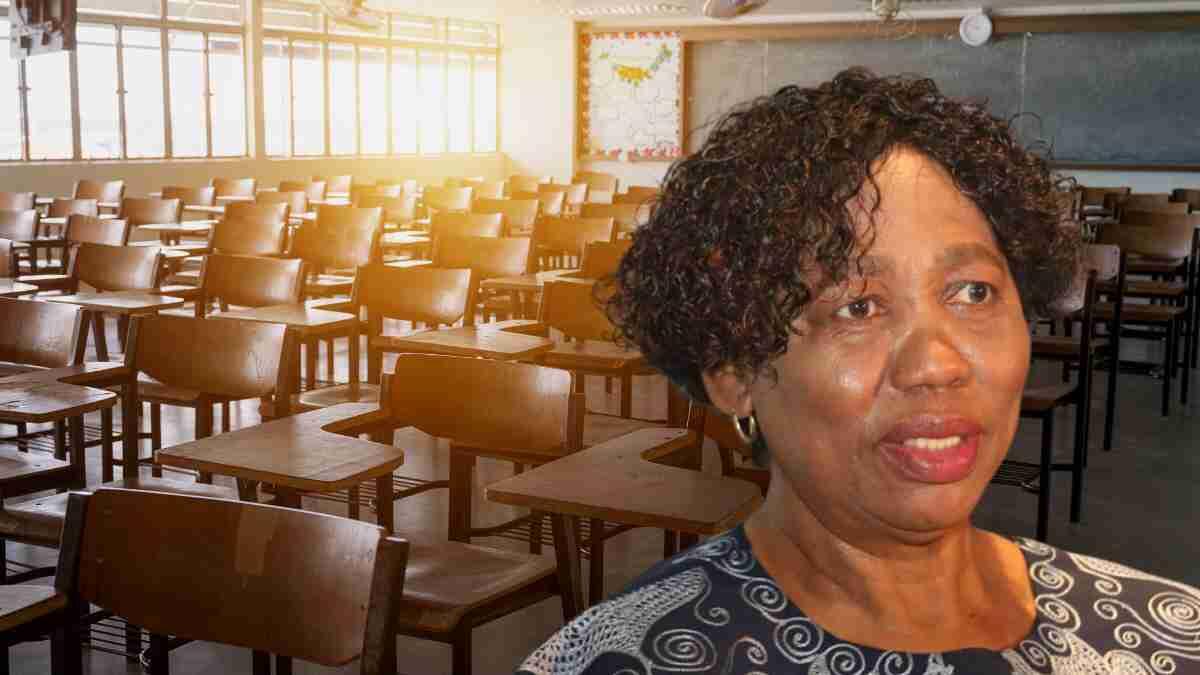
Chairperson of the Portfolio Committee on Basic Education, Bongiwe Pricilla Mbinqo-Gigaba, explained that currently they have only removed two clauses from the Bela Bill.
She notes that the clauses that have been removed are clauses 8 and 14:
- Clause 8: Allowing schools to sell alcohol outside school hours’.
- Clause 14: School Governing Bodies (SGBs) will be held more accountable for disclosures of financial interests – including those related to their spouses and family members.
Mbinqo-Gigaba says clause 14 has been removed as a result of stakeholder feedback particularly the SGB’s organisation.
When we were conducting public hearings, particularly the SGB’s organisation – they felt that there was no need for them to declare their information.
Language and admission policies
In a recent media statement issued by the portfolio committee on the draft bill, the committee clarified some confusion around the latest proposed amendments to the Bela Bill.
The confusion was specifically around clauses 4 and 5 of the bill, which relate to the admission and language policies of schools, and the proposal to give provincial heads of department (HODs) the final say on these policies, not leaving it up to school governing bodies (SGBs) to decide.
According to feedback reports on public consultations, these two clause of the bill emerged as one of the most contested.
Mbinqo-Gigaba, said that the majority of members of the committee agreed that the much-debated clause regarding language policy – that the governing body must submit the language policy of a public school and any amendment thereof to the Heads of Departments for approval – should remain.
The language policy must also take into consideration the language needs of the broader community.
The same stands for the admissions policy, she said.
Binqo-Gigaba confirmed that the committee adopted the proposed amendment that the Heads of Departments, after consultation with the governing body of the school, has the final authority to admit a learner to a public school.
The committee was clear in its resolution that the final decision on both of the above will be with the Heads of Departments. Any statement contrary to this, does an injustice to the work of the committee and the process that was followed in reaching the resolutions and is completely misleading.
The committee is expected to meet next week to adopt the final Bill before it is referred to the National Assembly for debate and consideration.