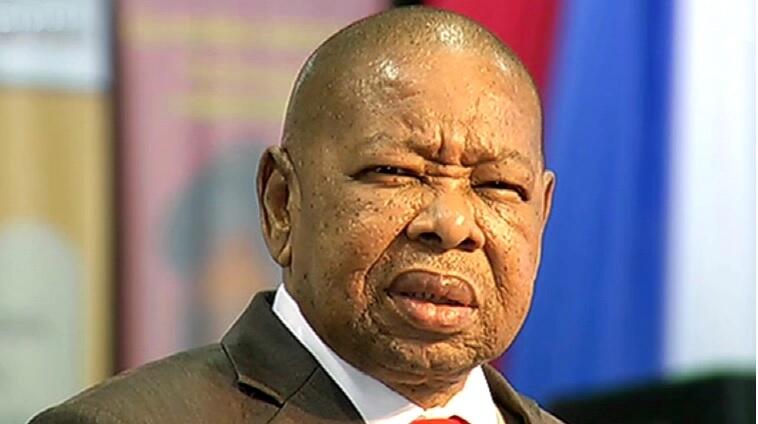
A draft policy that could result in South African universities being downgraded or shut down if they don't comply with new rules was gazetted on Monday by Higher Education Minister Blade Nzimande.
The proposed policy's main focus is on identifying the various higher education institution types in South Africa. It is currently available for public comment and has been allocated a 30-day comment period.
Jonathan Jansen, a professor of education at Stellenbosch University (SU), stated that the new policy will pave the way for higher education institutions to become universities while discussing the policy's benefits and drawbacks. The opposite, when public colleges lose their status, he claims, is unlikely.
In a very technical bureaucratic sense, it gives a path into higher education status for different kinds of institutions that at the moment are left stranded.
Furthermore, he emphasised that just reorganising colleges under a new framework does not enhance their standards, boost enrollments, or enhance research. This makes it possible to put various types of colleges closer to becoming universities than they otherwise would be.
According to the proposed criteria, higher education institutions will either specialise in a field like business or nursing or work in a "limited number of interconnected fields or domains," like allied health sciences like nursing and emergency medical care, safety, security, policing, and military studies, or the arts like art, drama, film, and design.
Higher education qualifications sub-framework (HEQSF) level credentials must account for at least 60% of the total qualifications.
Additionally, a university that is intended to expand, grow, or transition into a university over time, under the trusteeship of an existing established university, whether public or private and sponsored, whether publicly or privately, for this goal, is referred to as a university college.
Furthermore, a university college must demonstrate it has stable administrative capabilities, certain research activity, and "adequate and sustained" enrollment for all of its programmes, including undergraduate and post-graduate, to be upgraded to a complete university.
All three types of full universities are also required to meet the same criteria, whether they are teaching comprehensive, or research-led programmes.