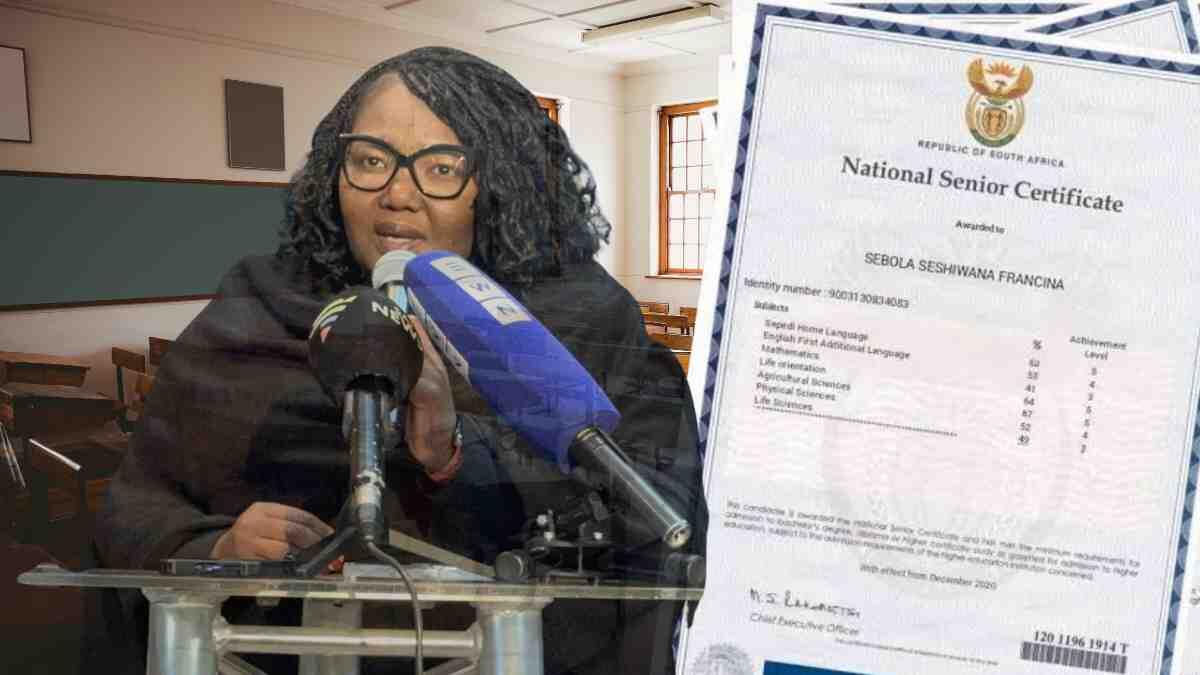
While Minister of Basic Education, Siviwe Gwarube, assured parliament that no teaching posts will be cut in 2024, 2025 remains uncertain for teachers.
In September, the Minister attributed the dire situation to years of aggressive budget cuts, economic stagnation, and fiscal mismanagement. The impact will be felt by schools that will operate with fewer teachers, work with reduced resources, and contend with increased administrative burdens.
Several provinces are facing critical budget shortfalls, with some struggling to cover basic expenses like teacher salaries, textbooks, and transportation.
The Western Cape Education Department (WCED) has already indicated that more than 2400 teaching posts will be cut. This will likely lead to larger class sizes and potentially lower-quality education.
While the WCED says these teachers will not be retrenched but rather reassigned, it does not fill unions with confidence.
National Professional Teachers' Organisation of South Africa (NAPTOSA) Executive Director Basil Manuel says while provinces outside of the Western Cape indicated they will not be retrenching teachers, they warned of "hidden retrenchments”.
All the provinces outside of the Western Cape have somehow, and believe me I don't know how they've managed to, indicate that they are not going to be retrenching anybody but of course there's hidden retrenchment.
Manual explained that these “hidden retrenchments” refer to school posts that will simply not be filled in the coming years. This includes temporary teacher posts.
The executive director expressed doubt over the indication from some provinces that they will not be retrenching teachers, arguing that some may not have done post-provision correctly.
In KZN [KwaZulu-Natal] up till yesterday we still didn't have post-provisioning properly done because schools were suddenly losing large numbers of teachers but allegedly they are not retrenching.
The WCED stated that the ratio of teachers to learners will increase from one-is-to-34 to one-is-to-36 due to the reduction of teaching posts.
Manual described this as a “lie” as the ratio cited by the WCED refers to a systems ratio. The system's ratio includes individuals who are not in front of a classroom.
It includes your management time. So the reality of class is that we are looking beyond 40 simply just when you have to have management time. There must be time for the principal to run the school and the heads of department and the deputy principal.
A major point of concern of budget cuts will be where they are felt most. This is in poor schools.
Manual explains that while all schools will be affected by budget cuts, poorer schools will bear the brunt of these cuts.
This is because well-resourced schools can often rely on governing bodies and fundraising to mitigate the impact of budget cuts. However, poorer schools lack these resources, leaving them vulnerable to staff reductions and increased class sizes.
National Attention On Budget Cuts
Minister Gwarube acknowledged that while budget cuts are affecting all government departments, the Basic Education Department is working closely with the National Treasury to mitigate the impact on frontline services, including teaching.
The Minister reiterated her department’s commitment to protecting education jobs, adding that although retrenchments will be avoided, teacher numbers will remain unchanged despite budgetary constraints.
However, the financial outlook for provincial education departments is increasingly bleak. In the 2025/26 Financial Year, four provinces will face significant challenges in covering their budgets. This number is projected to rise to five provinces in 2026/27 and a staggering seven provinces in 2027/28, indicating a worsening financial crisis for the education sector.