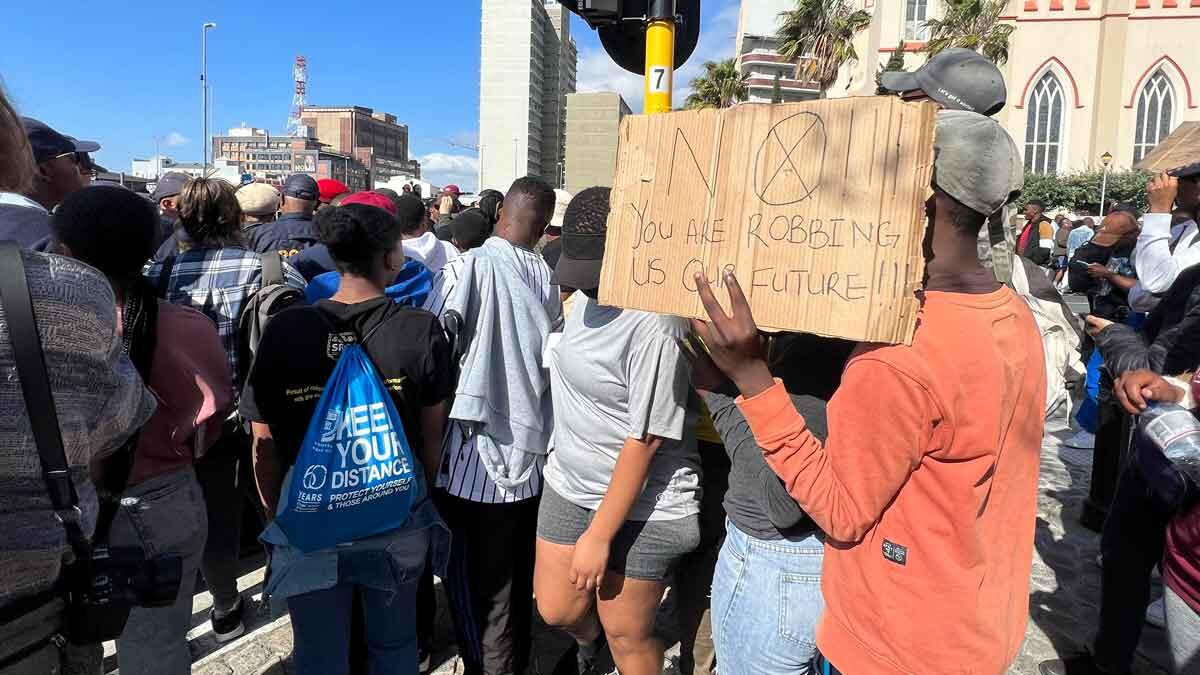
The recent defunding of 45 000 students affecting their housing and meal allowances and along with an alleged problematic direct payment system has again cast a spotlight on the workings of the National Student Financial Aid Scheme (NSFAS).
The Democratic Alliance (DA) says problems with the NSFAS operations model and ICT interface differences between institutions and the scheme are amongst the reasons why the scheme is riddled with challenges.
DA MP Chantel King, says the current higher education funding model is highly unsustainable considering declining levels of economic growth, the shrinking tax base, poor fiscal management, and corruption.
“To solve the myriad of problems” the DA has presented a proposal for immediate and longer-term alternatives to the current NSFAS funding model.
DA’s alternative funding model
According to the party’s proposal, which was announced at a media briefing in Parliament on Thursday, 31 August 2023, they are proposing the implementation of a tiered system for loans and grants with a primary focus on providing financial support to students from low-income households.
The party says its alternative funding model is more sustainable and will ensure that more funds are made available as students will have access to a variety of government loans, which qualifying students will repay at a later stage.
Under the DA's funding model, students will have access to a variety of government loans, each coming with favourable repayment conditions. This differentiated loan scheme suggests the introduction of income bands linked to the portions of awards, and the regular updating of these bands.
They added, “This approach has the potential to facilitate repayment to the state at a later stage, thus replenishing resources that can then be redirected towards supporting incoming students."
Some of the parties proposals include:
- Providing proportional assistance to those in the “Missing Middle” who can afford to pay a portion of their expenses.
- The Funding Model of loans will also be combined to include scholarships as an option. Scholarships will be awarded to outstanding students and are non-repayable.
- Converting loans into bursaries will be considered based on the academic performance of the student.
- Higher Education will not be free for those who can afford to pay their tuition.
- The blanket accommodation cap must be scrapped.
Loans will also be combined to include scholarships as an option. These will be awarded to outstanding students and are non-repayable. Converting loans into bursaries will be considered based on the academic performance of the student.
Furthermore, the DA also plans to collaborate with the private sector to enhance access to student funding from bank loans and sponsored scholarships.
The party says that another option is to establish an effective debt collection system through collaboration with SARS, the Credit Bureau and potential employers as well as ensuring that higher education will not be free for those who can afford to pay their tuition.
DA funding criteria
In a banded system, the DA’s proposal stated it would offer loans for:
- Full cost of study for those with annual household income up to R180,000;
- 66% cost of study for students from households with an income of R180,000 to R350,000; and
- 33% cost of study for students from households earning R350,000 to R600,000.
“This way, we will ensure that loans cover the full cost of study of some eligible students rather than a portion of the costs for a larger group,” the party’s proposal read.
The proposal also stated that the administrative functions of NSFAS would be decentralised to institutions. This would prevent administrative backlogs and prevent funding delays.
NSFAS Allowance Delays
After several university students raised concerns last week regarding delays on their NSFAS allowances, the bursary scheme noted that it suffered a technical glitch but undertook to pay students by Friday, 01 September 2023.
NSFAS explained:
The scheme had a technical glitch resulting in non-payment of allowances today; however, this has been fixed and NSFAS will affect payment by midnight 31 August 2023 for the amount to reflect in the beneficiaries account by 12h00 01 September 2023.
However, by Saturday morning payments had yet to materialise for many students, according to DA Students’ Organisation federal leader Liam Jacobs.
“It has come to our attention that students, who are beneficiaries of NSFAS, have not received their allowances due to NSFAS' administrative lapses,” Jacobs said in a statement on Saturday.
This situation has caused immense mental stress and financial hardship for these students, and it is absolutely unacceptable.
“The current NSFAS system is unsustainable and in a state of decay. It is imperative that we reject its failed socialist origins and embrace a fresh, new, and sustainable funding model," Jacobs added.
The DA has urged Higher Education Minister Blade Nzimande to intervene and address the issue of payment delays to alleviate the suffering of thousands of students.