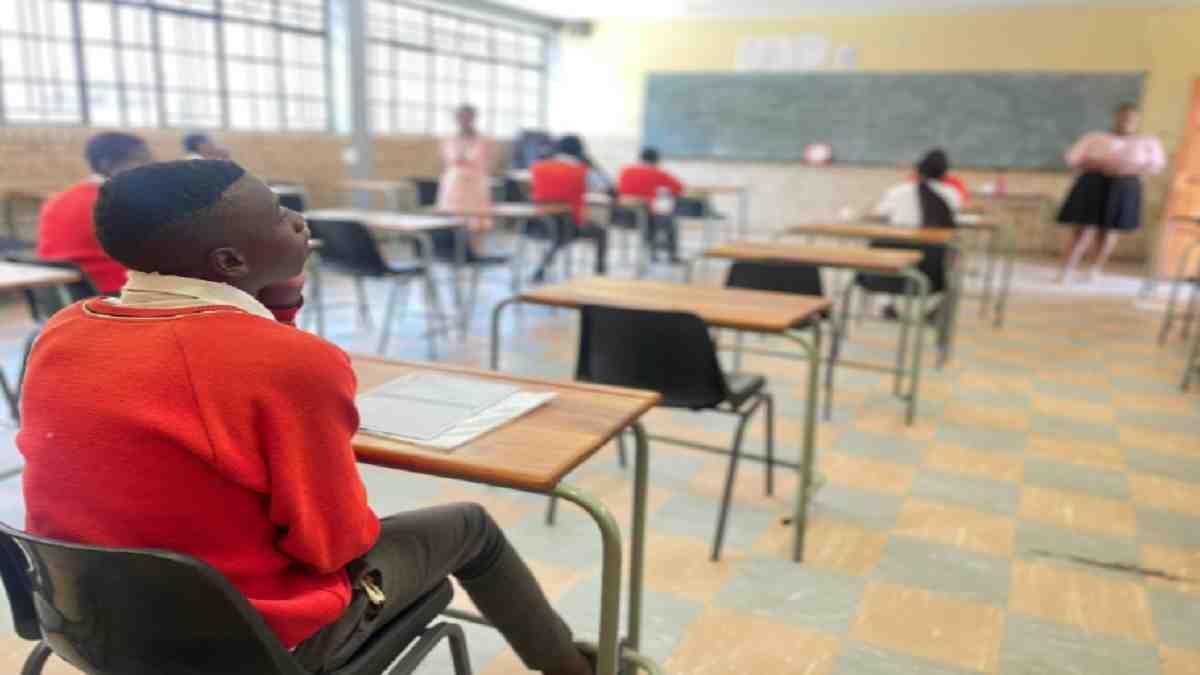
South Africa’s public schooling sector is facing a crisis in which thousands of learners have failed to complete their schooling after deciding to drop out. The various underlying causes of the issue are multifaceted.
One of them is that schools, particularly those that are poorly resourced and located in remote areas of the country, do not have facilities that encourage learners to participate in extracurricular activities, which adds to the rising drop-out rate throughout the country.
Merle Mansfield, the Programme Director of Zero Dropout says that this a longstanding continuous issue that is more pronounced in quintile one and quintile three no-fee paying schools.
“One of the key things for us to remember is that the dropout rate is pervasive. It’s something that has been happening continuously in a normalized way, particularly in our poorer schools. We see many learners getting stuck in the school system in our quintile one to three schools.”
The above-mentioned category of schools have a repetition rate of above 60%, which translates to approximately 40% of learners who are not of the right age for their grade level, particularly in Grade 10.
She adds that it is often the case that, when a learner spends an extended amount of time repeating the same Grade, they are more likely to drop out of school.
The primary cause of this, according to the organisation’s Programme Director, is that under-resourced schools lack the proper support structure to accommodate learners who are struggling through the curriculum.
“Once the learner has repeated quite a few times, they are over age for their grade, which makes them more likely to drop out of school. Because once they become too old for their grade, it becomes a self-esteem issue and it also becomes an issue being able to access additional support, because there isn’t support in schools for learners who are struggling or even remedial support, which doesn’t exist”
Additionally, most of these schools also suffer resource constraints to the extent that they are forced to focus on making it through the core curriculum.
Many of them have large classes, fewer teachers, no office core programming, and tutoring programmes. They have no programmes to identify learners’ psycho-social support needs and many of them have no facilities for extra-curricular activities.
There are no skills-based enrichment programmes to encourage learners to explore their other interests that they may have, which would encourage them to remain in school. The social instability of learners' living environment and poor socio-economic circumstances are also cited as contributing factors to the existing dropout rate
“So now the only thing they have is academics that they are already struggling with, there’s no support to get through that struggle and nothing that excites them to return, it makes school unappealing” Mansfield explains.
In addition to this, the 2021 After-School Programmes in South Africa report by Joy Olivier further emphasizes the importance of after-school programmes as means to mitigate the dropout rate in schools throughout the country. The report points out that 44% of learners drop out of school before reaching matric
Zero Dropout currently has ongoing programs in Kwa-Zulu and the Eastern Cape where the organisation has people who serve as support staff that assists in identifying learners that are struggling.
The Support staff also introduce programmes that help this cohort cope and instil within them a sense of belonging to the school.