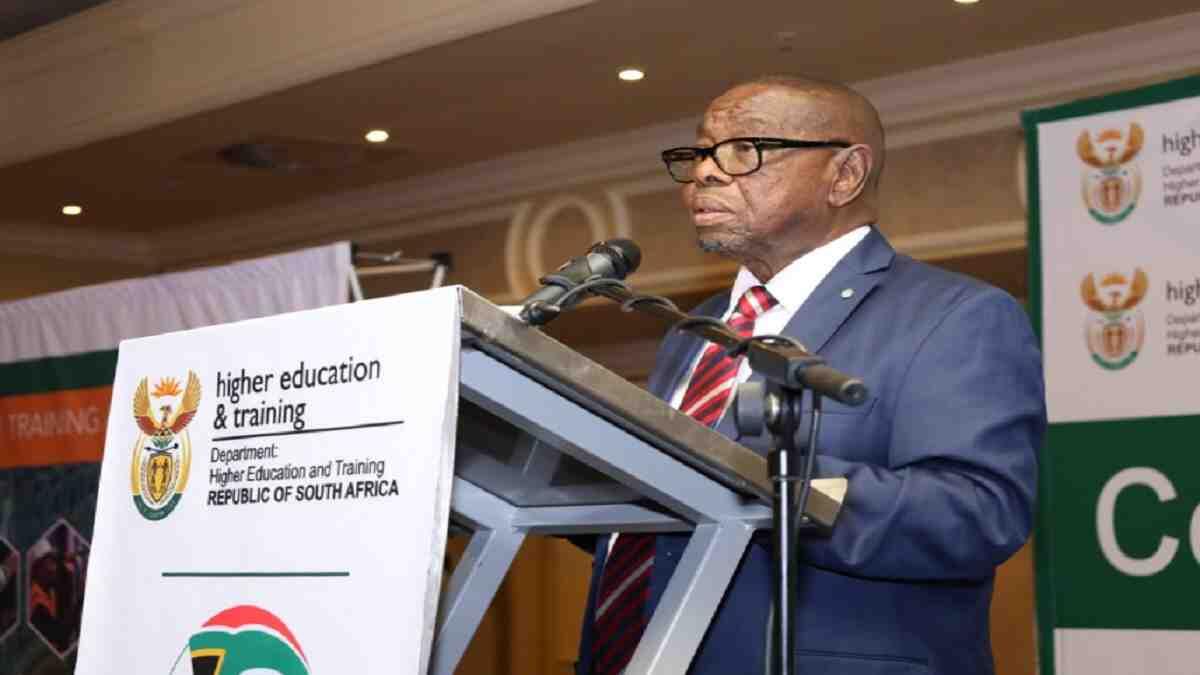
The Department of Higher Education and Training (DHET) and the Minister of Higher Education, Blade Nzimande, have made multiple suggestions and developed potential solutions when it comes to alleviating some of the challenges faced by "missing middle" students.
The "missing middle" is the term given to students who are considered to be "too rich" to receive funding from the National Student Financial Aid Scheme (NSFAS), but are not rich enough to pay for their studies completely out of their own pockets.
Asive Dlanjwa from the South African Union of Students (SAUS), said, when asked if free higher education is possible:
Do we have free education? We don’t because we still have the missing middle. Missing middle are still children of the working class and those students are still not able to access institutions of higher learning, owing to a student funding model that does not cater for them.
In a recent Parliamentary meeting, one member in attendance noted that looking at the current NSFAS funding model, access to higher education for the missing middle was becoming fewer and fewer. It was a big injustice for parents of the missing middle to pay taxes, yet their children had no choice but to go to a private university.
The exclusion of the missing middle from accessing and affording higher education has been continuously criticized and discussed, with the DHET and Minister Nzimande promising to develop and implement better funding models that includes the missing middle group of students.
The economy has changed and therefore, issues have changed, and families are struggling more now, added Dlanjwa.
Right now, we need higher education. Higher education would allow us to upskill and reskill our people to respond to what are now the prevalent conditions which are facing our economy. Time to advance and invest in higher education aggressively...It’s an issue of the priorities of government. We are spending billions of rands in the sector but are not getting the return.
The National Student Financial Aid Scheme (NSFAS) also made the decision in 2021 to no longer fund postgraduate studies, further excluding students.
Financially excluding certain students prevents them from continuing their qualification, obtaining their degree, graduating and could impact on their ability to secure employment later on.
The idea of free education is also tainted by the fact that NSFAS has been the centre of many instances of fraud and corruption, with the latest revelation involving R5 million in mismanaged funds, leaving students with not much hope.
Rudie Heyneke, from the Organisation Undoing Tax Abuse (OUTA), is in agreeance with Dlanjwa.
If we relegate the wasteful irregular expenses, not only in NSFAS. If we look at the broader higher education department. If you put all that money in one basket, we can reach that middle class.
OUTA recently revealed its findings that resulted from an investigation into NSFAS, questioning whether certain areas of spending are necessary, or are actually draining the bursary scheme's resources, at the expense of student subsidies, most notably the R45 000 student accommodation allowance cap implemented this year.
NSFAS Spokesperson, Slumezi Skosana, feels differently from Heyneke and Dlanjwa, stating that (to them) higher education is free and that we are currently in the midst of it.
Skosana added that government has made promises to focus on the poor and the working class, and believes that they are doing that.
When asked if the income threshold stipulated by NSFAS that allows students to qualify for funding should be increased from R350 000 to R600 000, Skosana said:
Middle class, according to studies, means someone earning R22 000 per month which equates to R264 000. Everyone in country, according to that measure, would qualify...South Africa can’t afford to pay for all higher education across country.
Higher Education Minister, Blade Nzimande, previously revealed that government is investigating introducing a loan scheme to assist missing middle students. Information of this missing middle student loan is set to be revealed when the DHET publishes its Comprehensive Student Funding model.