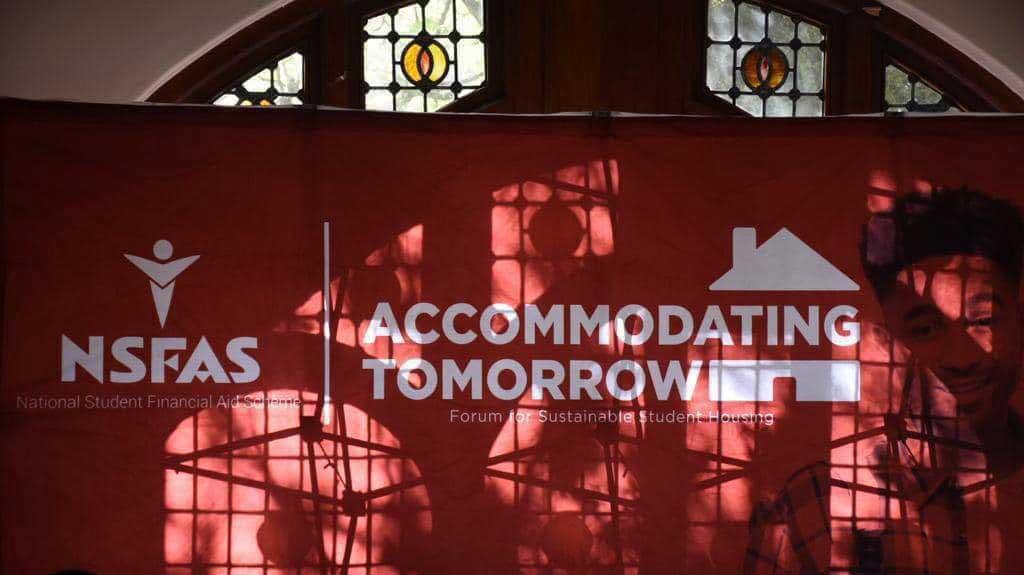
The Private Student Housing Association says delayed accommodation allowance payments from the National Student Financial Aid Scheme (NSFAS) negatively impact students. This comes as NSFAS recently committed to finalising outstanding payments to landlords.
Earlier this year, it was revealed that NSFAS owes accommodation providers in excess of R44 million. While the government bursary scheme worked to resolve the payments, in the subsequent months, only part has been paid, with R27 million still outstanding.
Private Student Housing Association CEO Kagisho Mamabolo says the money owed to accommodation providers has put financial strain on them, leading some to consider cutting services such as transport for students.
Mamabolo explains that accommodation providers must meet stringent criteria in order to house students. However, their ability to meet this eligibility criterion is negatively affected by delayed allowance payments.
One of the major considerations when it comes to student accommodation is safety. Mamabolo says accommodation providers are required to provide 24-hour security for students and implement biometric screening in their buildings.
However, when NSFAS payments to accommodation providers are delayed, some providers cannot pay for these services and cut them, negatively affecting the students. In some cases, students have faced eviction.
We are expected to provide 24-hour security for students, biometrics at our building, and ensure that students are secured. That, on its own, requires personnel that must be on the premises day to day. So if payment doesn't come and there's no assurance of that payment, we have to reduce the staff that patrols the building.
NSFAS released a statement committing to pay landlords on Monday, 31 March 2025. The scheme was initially set to pay providers on 4 May but said the adjustment reflects their commitment to providing timely and efficient support to students who rely on NSFAS funding for their accommodation needs.
Despite frustration, the PSHA remains hopeful about NSFAS's new leadership, with CEO Waseem Carrim committed to resolving outstanding payments and introducing a structured payment schedule.
Mamabolo believes a fixed payment schedule and certainty of future payments will allow accommodation providers to tackle the accommodation shortages in South Africa.
They explain that they will look to raise several key issues with the scheme, including the lease agreements accommodation providers must abide by.
The issue of the lease agreement that NSFAS is forcing us to implement—and we believe that implementing that lease agreement, which is not viable, is going to cripple our businesses.
NSFAS introduced an accommodation portal that centralises student accommodation.
After conducting a pilot programme at several institutions, NSFAS launched the full programme this year.
However, Mamabolo stressed that the previous agreement, in which institutions paid accommodation providers, worked, and the new system has created a new list of challenges.
Our frustration is that NSFAS experimented with the system, it failed, but they still rolled it out.
Mamabolo says the centralised accommodation system requires further trials before it is implemented to reduce the potential for students facing challenges.