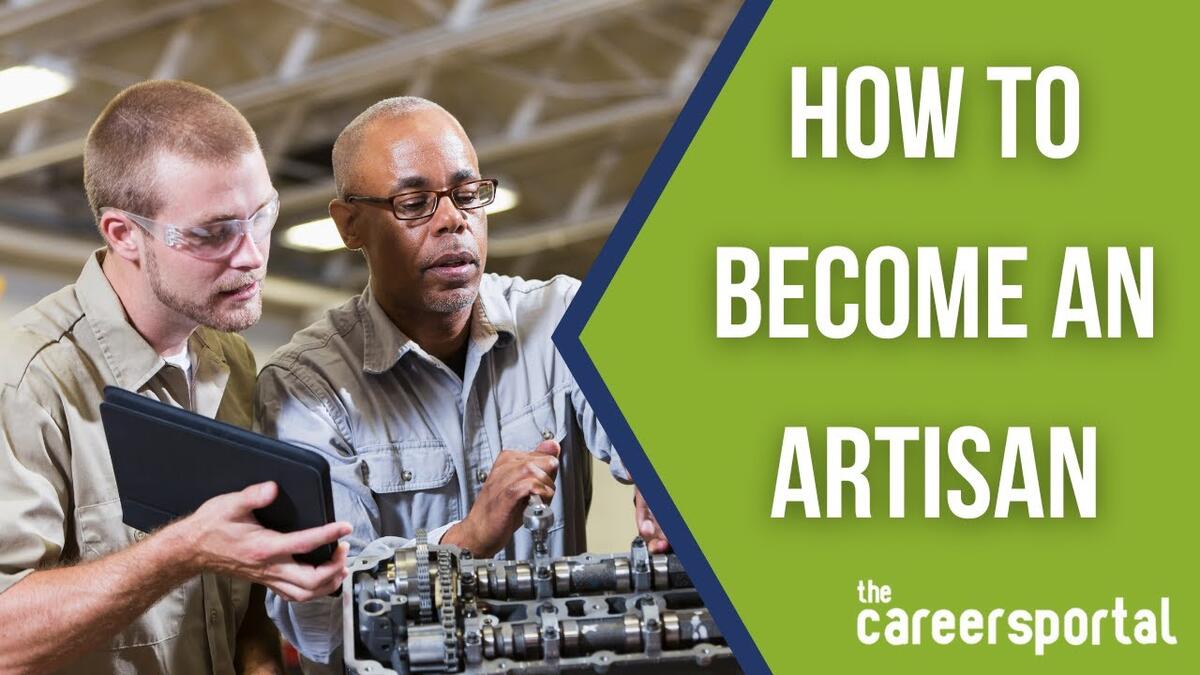
This is the view of Zizile Lushaba, Human Capital & Skills Development Executive at SEIFSA who believes that innovative, self-driven, self-starters, who are technical and enjoy solving problems and working with their hands make good candidates for artisan training, which can include becoming a welder, fitter and turner, boilermaker or pipe fitter.
At a time when the unemployment rate is close to 40% (39.2% in the first quarter of 2023), with the jobless rate among young South Africans as high as 61%, the focus on post-school education and training must be on being employable. Choosing a trade increases young people's chances of being employed as there is huge demand for more artisans in all sectors of the economy and this is not only true of South Africa.
Degree-based careers may pay better, but you have to be employed before getting paid. South Africa has many unemployed graduates which just goes to show that a degree does not always guarantee a job. Of interest, there are far fewer trained artisans languishing among the unemployed.
The emphasis on practical training makes newly qualified trades people infinitely more employable than university graduates.
Trades require the following three elements — theory, simulation (practical training) and experiential learning (on-the-job training). Experiential learning allows the learner to be exposed to the workplace sooner than university graduates, which provides the opportunity to learn from professionals who guide and mentor them.
The trades also offer learners who may battle to achieve the marks needed to study at university an alternative and sometimes far better option than simply slotting into whatever degree I will be accepted into.
“University is theory intensive while a trade provides an opportunity for individuals who might not excel as much on theory but would be far better with hands-on, practical exposure and learning. Being employed as an apprentice and/or qualifying as an artisan also provide earlier earnings prospects, which is a big benefit for many South African families,” she says.
There are many colleges around the country where young people can learn a trade. The SEIFSA Training Centre in Benoni, Gauteng, for example, offers a full range of artisan training — from welders to electricians. It has also kept up to date with the needs of the Fourth Industrial Revolution (4IR).
Furthermore, the Centre also offers skills such as robotics and 3D printing to meet industry demands and these skills are taught using e-learning, virtual reality and e-assessments. The Centre can train 250 people per day and offers apprenticeships in 10 trades.
As part of its commitment to empowering young South Africans, SEIFSA took part in Cell C's recent Youth Day Event. The See Youth focused on ways to empower the country's youth, including helping them to develop the skills of entrepreneurship among other things.
Many artisans find that their practical skills and experience are perfectly suited to running their own small businesses, as Lushaba says, these skills are useful in “day-to-day life for those who are looking to explore the entrepreneurial route”.
Young people choosing to study a trade will also be helping the South African economy as there is a dire need for more artisans. President Cyril Ramaphosa was clear about this in his State of the Nation Address in February 2023. He said the number of students taking part in artisan training in TVET colleges would be increased from 17,000 to 30,000 in the 2023 academic year.
One of the key ingredients for economic growth and competitiveness is the ability to attract skills which the economy needs.
Many young people and their parents, worry about how they can increase their chances of finding employment, especially with the unemployment rate being so high. Artisans are always in demand — from the most to the least developed economies — and this is unlikely to change in the near future.
How long does it typically take to learn a trade?
- Minimum three years, maximum four years
- Six months institutional training for single trades and nine months training for dual trades such as millwright (electrical and mechanical)
- A minimum of 18 months’ workplace exposure
- A minimum of six weeks trade test preparation
- Two-day trade test for single trades; three days for dual trades