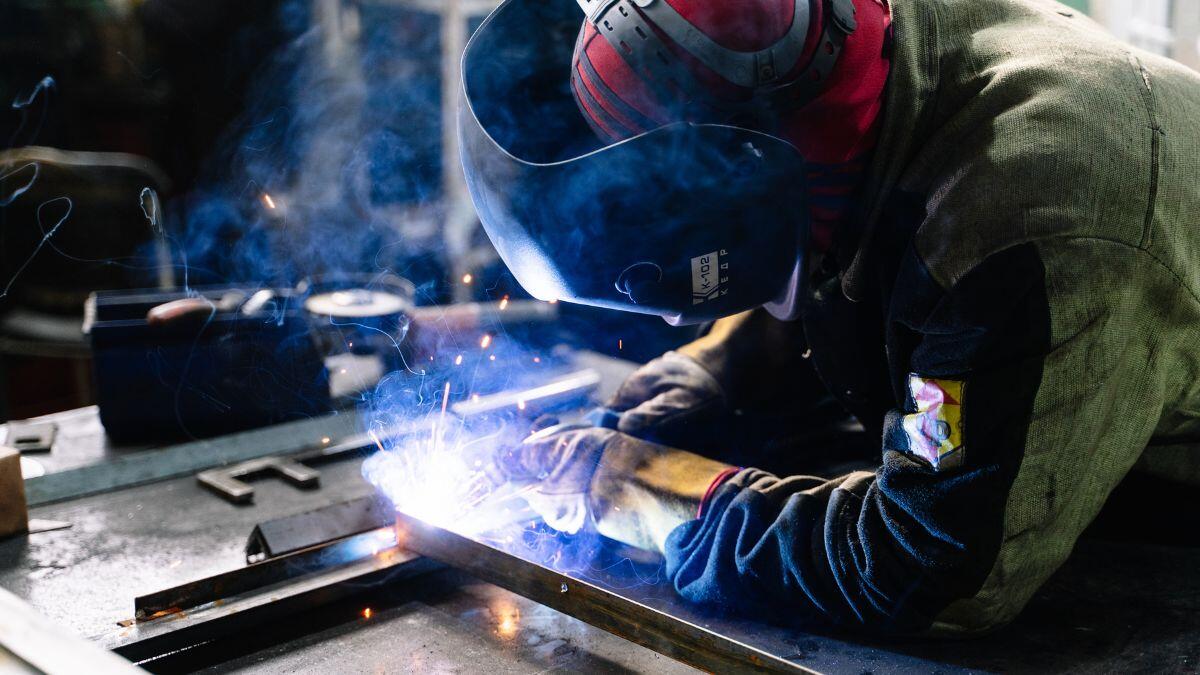
Being a welder involves the construction and repairing of metal products. The work of a welder can be integral to many jobs, as they are often tasked with repairing or creating metal instruments that can be used in many different careers. The class of the welder is directly proportional to the complexity of the tasks performed.
For instance, a first-class welder will use qualified procedures which determine the welding methods to use, joint preparations, the choice of consumables, level of pre-heat and nature of any post weld heat treatment. Related professions include that of boiler makers and sheet metal workers who can also follow a career in mining.
One other possible career path is that of a fabrication engineer, who would typically examine drawings, as well as determining material and equipment requirements. A fabrication engineer is also involved in the fabrication of parts, in the heat treatment of components, in the setting up of tools and equipment and, of course, in the assembling of structures by alignment and fit-up of sub-components for joining by welding.
It is important for any welding professional that wishes to work in the mining industry to be aware of the complications and pressures related to welding underground. Mining can be dangerous and welding underground adds to the necessity of having safety requirements in place.
There have been many fatal industrial fires due to unsafe welding or cutting operations. This is because welding sparks can travel as far as five meters and spatter can bounce on the floor or fall through openings.
Thus, the risks include: fire; explosion due to flammable gasses; radiation and heat burns to the body; electric shock, asphyxiation and illness due to the inhalation of toxic fumes from gases created and used. In South Africa, the infamous Kinross disaster was caused by a welding accident.
Sound training is of critical importance with regards to possible hazards and how to guard against them. It is also the starting point in educating welders and supervisors about these possible dangers. When welders are aware of the safety risks, they are warned and equipped to take the necessary precautions.
According to Etienne Nell, Manager of Marketing at the Southern African Institute of Welding (SAIW), the most important aspect of creating a career of welding in mining and ensuring safety, is training.
“The correct training can make the difference between life and death”, said Nell, adding that all the SAIW courses are relevant to welding in mining. Safety is an important component of the courses, he reassured.
Necessary safety precautions include the removal of combustible materials before welding, cleaning all flammable substances from the surface and the use of normal fire hazard equipment, such as having fire extinguishers on hand, wearing protective clothing and a face shield.
Respirators will protect the welder against inhaling fumes and gasses. Other safety precautions include having equipment checked regularly, turning off welders before touching electrical parts and avoiding any moisture while welding.
Yes, clear guidelines to ensure safety in mining are included in various acts, such as the Occupational Health and Safety Act and guidelines published by The Department of Mineral Resources.
Also, The Safety, Health, Environment and Quality (SHEQ) officers at the mines are responsible for safe welding and can provide the correct guidelines. Furthermore, the Chamber of Mines has produced a comprehensive guideline for safe welding operations in mining.
The recommendations include doing a risk assessment before any welding is undertaken underground and keeping records of all aspects of cutting and welding operations.
Cutting and welding underground must only be performed when the necessary safety permits have been issued by operational personnel. Training should include safe operation, inspection and checking of the equipment, maintenance and repairing of the equipment.
At the SAIW, we can help set you on the path towards a lucrative career in welding.
The Southern African Institute of Welding (SAIW), founded in 1948, is a not-for-profit organisation with a purpose to further standards in welding, fabrication and related technologies. The SAIW is active throughout, but not restricted to, the Southern African region with widespread experience in countries such as Nigeria, Ghana, Cameroon, Mauritius and the United Arab Emirates. It offers consultancy and support services, as well as a wide variety of welding and Non-Destructive Testing (NDT) courses that can combine into a SAIW and IIW (International Institute of Welding) diploma. The growing corporate and individual membership includes major national corporations, as well as small and medium enterprises.
The Institute head office is a purpose-built building located in Johannesburg, Gauteng, with branches in Cape Town and Durban.
For more information contact: 011 298 2100 or visit the official SAIW website.